Getting new shooters interested in and comfortable with firearms doesn't need to be too difficult. Some folks have grown up around guns but had never really spent a lot of time with them as an adult. And yet others have never shot firearms at all and maybe grew up in families that did not like firearms. But regardless of experience levels, it is great to get new shooters out to go shooting and get them comfortable around firearms. Many new shooters do extremely well because they have not built up a lot of the bad habits that we old-timers have. They just need some training in the fundamentals and safety, and then some hands-on coaching as to how to improve grip, trigger control, aim, and presentation. I have found that many brand new shooters are like sponges - they are extremely open to and absorb what I am teaching them very quickly.
Today, many of my former students who I stay in touch with are crack shots and can handle a firearm with the best of them. But I know that some people who, even though they just aren't comfortable around firearms, tend to warm up to them and actually enjoy the shooting sports if taught properly. So here are some of the things I have learned along the way, not only teaching my wife and daughters to shoot but in teaching some of my brand new students as well:
Do not pressure the new shooter. This is not military boot camp; you will find that high-pressure tactics are counterproductive. Trying to pressure newcomers to do something they do not want to do or are not familiar with will only ensure that they will never accept it.
Have the appropriate safety gear. Having eye and ear protection ready and explaining their use will help allay any fears. Also, before the firearms are introduced, go over the four basic firearm safety rules:
Every gun is loaded, even if it is disassembled.
Never point your gun at anything you do not intend to destroy.
Keep your finger off the trigger until you are ready to fire.
Be aware of your target, what is behind it, and is between you and the target.
Start with a simple, small caliber firearm. Explain and show the basic operating principles of the firearm you use. For teaching long guns, I like either a .22 semi-auto like a Ruger 10/22, or a single shot break action .410. If I am teaching pistol use I prefer to start with a .22 or a .38 revolver. Make sure that if you start with a magazine fed firearm, you still have them try out a revolver to see what they are most comfortable with, and so that you can explain the differences between the two types of firearms.
Do not use humanoid targets until you start to get into defensive shooting. If it's an outdoor range and we are using long guns, clay pidgeons also work well. They break in a satisfying way and are biodegradable. I like to use simple bullseye targets for rifle shooting also. For pistols, a regular target turned around with a paper plate stapled to the center gives a large non-threatening target.
Last but not least, go slow. Answer any questions simply without going into a long technological lecture. The point of the first few sessions is to allay fears and allow your newbie to become accustomed to shooting.
You will find, as I have, that if you make new shooters feel secure, allow them to go at their own pace and do not pressure them, people new to the shooting sports will rapidly begin to enjoy this activity. My wife and daughters took to shooting like naturals, and now they get better range scores than I do.
Support the NRA and Protect Our 2nd Amendment Rights!
NRA Membership is Affordable!
A one-year regular membership is just $30.00 per year, with savings for multiple years or life memberships.
A full membership also includes your choice of magazine subscriptions to the most informative firearms publications available today.
Let me just say up front: Colorado law gives me criminal and civil immunity from prosecution should I decide to use deadly force in the event of a home invasion. In a home invasion scenario, I will take full advantage of the legal protections afforded to me by law. The main objective of any self-defense method is to stop the attack, and my philosophy is to stop the attack and protect my family by the most effective means available to me at the time. For me, that method of self-defense includes having ready firearms, being trained to use them, and then employ them where needed.
But not all people are comfortable having firearms in their homes, and not everyone is comfortable shooting firearms. That is fine. The methods that are right for me are not necessarily the methods that are right for others, and I respect that. I wrote an article a while back on "Principles versus Tactics" to explain that you have to decide what you are willing to do in a particular situation, then for you to decide how you will accomplish that.
It is also important that I maintain my training and proficiency in my primary self-defense tool as well as a variety of other self-defense methods that I may need to employ to stop an attack. It is not always time or cost effective to schedule trips to the range to expend live ammunition. There are a variety of training methods out there that I use, including dry firing with the LASR App System, and using non-lethal projectile shooting tools such as paintball to help build the muscle memory involved in firearms operation, and that allows you to actually practice tactics with moving targets in a safe environment.
There are many other self-defense and training tools out there, but in my testing, I have found one in particular that I am writing about today offers both a good training tool and a good home defense tool, especially for folks who just aren't comfortable with having firearms in their homes.
Paintball as a Training Tool:
When it comes to training for tactics, having the ability to shoot at moving targets, and in return being shot at by moving targets offers more realism into actual scenarios that you may encounter. This is a type of training often referred to as "force on force" training and is more effective at helping you to learn tactics and gun handling skills under pressure than simply shooting at static targets. The type of training tools to achieve the desired proficiency outcomes is an important aspect to consider, however. Whereas airsoft tends to use guns that emulate actual weapons functionality, such as forcing you to perform magazine changes, they offer little, in comparison to paintball, in the "pain" incentive to force you to be more tactfully minded to prevent from being shot. While I have found airsoft to be a great training tool for indoor close quarters training, paintball offers a more fast-paced alternative to outdoor and longer range scenarios. Since the incentive "not to get shot" is higher with paintball, the "stress inoculation" component obtained provides a more realistic force on force training as well.
Paintball as a Group Bonding Tool:
Putting on my prepper hat for a moment: Being able to train with your family, members of a team that you are prepping with, or even just the people you work with has its benefits also. Paintball fields seem to be popping up all over the place. Here in Colorado, "woodsball" is a very popular activity, as we have our beautiful mountains and forests in which to play games, and those areas offer a wide variety of terrains and scenarios. Grab your bio-degradable paintball ammo and head for the hills! Paintball has become very popular for families and groups to include as part of a camping trip, as well as for groups of co-workers to plan team-building events.
Paintball as a Home Defense Tool:
In my recent testing, I have been quite impressed with the types of non-lethal self-defense paintball ammunition on the market today. In addition to regular paintballs, you can also purchase pepper balls that contain pepper spray, hard rubber balls, PVC nylon balls, and even glass balls containing iron dust for use in paintball guns as a self-defense tool. In my testing with various materials used as targets, I have seen the PVC Riot Balls, for example, cause enough damage on multiple thicknesses of heavy cardboard and drywall to be very plausible as a self-defense method. I am awaiting a shipment from Bulls Breaker Balls in South Africa so that I can test their latest product, but my research so far indicates that that product has promise as a self-defense ammunition as well.
Paintball Gun Recommendations:
Hands down, the Tippmann A5 is my personal recommendation. The Tippmann A5 is sort of the "Ruger 10/22" of the paintball gun world in that accessories, modifications, air supply variations, upgrades, and spare parts are so plentiful and widely marketed, that this gun can be personalized very easily. This gun is extremely easy to work on and maintain, and there are a plethora of YouTube videos out there to give you advice and instruction. I also prefer the Tippmann A5 simply because of the "Cyclone" feed system that has shown to be extremely reliable, and saves the expense of having to buy an add-on electric hopper, or some other feeding system, ta make the gun run consistently and reliably. The Tippmann A5 also uses the larger 20+ oz CO2 and 3,000psi High-Pressure Air (HPA) supplies, which allows for larger capacities and more shots. Reusable CO2 canisters are relatively inexpensive to purchase and fill, and fairly easy to find refill stations. HPA refill equipment is becoming more readily available and inexpensive, and HPA is said to actually be better on paintball gun internals and more consistently shooting in a variety of environmental conditions (temperatures) than CO2.
My home-defense Tippmann A5 is modified with a buttstock, red dot sight, Vortex magazine conversion kit, and Flatline Barrel. The magazine conversion is inexpensive and was very simple to install. Instead of a hopper that is now in the way, I have the ability to load 20-round magazines with a variety of ammunition types. I have the red dot sight set up for very close engagements, zeroed for 21 feet, a typical distance of encounter within my home. I have the velocity set at around 300fps, which is enough velocity to be effective, but yet low enough to help prolong the life of the gun internal valves and o-rings. The CO2 supply is a 24oz external cylinder that is screwed in, but not fully, so as to prevent leakages, but still be on the gun so that it can be quickly screwed in the remaining turn or two to fully charge the gun when needed. The ready condition of this gun also includes a fully loaded magazine in the gun and four spare fully loaded magazines nearby.
For those of you who prefer more of a "handgun" type of platform, there are two front-runners out there. The Tippmann TiPX, and the Tiberius T8.1. In fact, the Tippmann TiPX is used as the manufacturing model for the SALT Supply Pepper Gun, as those models are actually manufactured by Tippmann, and then sold as a self-defense weapon. Both the Tippmann and Tiberius are .68 caliber paintball guns, an important factor when choosing a caliber for your paintball ammunition. 68 caliber is the most readily available when choosing actual self-defense rounds, and it has more capability as a self-defense caliber (in my humble opinion) than the smaller paintball calibers. Both also use the smaller 12-gram CO2 cartridge for the air supply. These cartridges are very inexpensive to buy in large quantities but have very limited capacity when shooting. I recommend the handgun platform as a backup, but not as a primary defense tool.
My personal preference (for the handgun platform) is the Tiberius T8.1. The main reason I chose the Tiberius model is because the CO2 cartridge and the paintball rounds are both contained within the magazine. That means that will very magazine reload, you are getting a fresh CO2 canister as well as more ammunition. These paintball pistols only fire 10 or so rounds per paintballs CO2 cartridge, so being able to quickly reload both ammunition and CO2 quickly is extremely important in a self-defense scenario. I also chose the Tiberius model because it comes ready to go out of the box with the ability to load and shoot the new "First Strike" shaped paintball rounds, which come in both paint and solid self-defense rounds.
A Word on Airguns/Airsoft for Self Defense:
Airsoft guns are NOT self-defense tools. Period. They may offer a half-second distraction so that you can flee and go find another weapon, but they will not stop an attack. There is a chance that brandishing that airsoft gun will give the bad guys pause, but they will soon see that orange tip and know that you do not have the ability to do them any harm at that particular moment. Other air guns, such as pellet guns, may have the ability to cause minor injury or a momentary distraction, but again (in my humble opinion), pellet guns just are not made to be self-defense tools. There are varying opinions about that out there, certainly, the video below explains some ideas on the subject.
Wrapping It All UP!
I believe in firearms as the most effective defensive measure in the event of a home invasion. Period! Violent criminals only understand one thing: Force. Speed, surprise, violence of action, and a determination to win will help you prevail against evil. I always have a firearm at the ready at various places in my home and am ready to employ the firearms as a defensive measure all the time, but I also have non-lethal tools such as pepper spray and paintball guns that I see as viable options in home defense scenarios.
Not everyone is comfortable with having firearms in their homes and would like a non-lethal measure to stop or at least slow down an attack. Paintball guns offer a viable self-defense alternative, in my opinion. There are a variety of inexpensive and reliable paintball guns out there, including the Tippmann A5 and Tiberius T8.1 guns, that can easily be adapted and customized for home defense use. But whatever tool or tactic you choose, you must be familiar with the operation and maintenance of that tool, be familiar with its capabilities, and above all practice using them in order to be effective.
Over the years, I have had the good fortune to train with a wide variety of firearms and tactical instructors, and have learned efficient and effective gun-handling techniques from each and every one of them. The instructors that I have worked with and trained under include law enforcement, SWAT Team Leaders, NRA civilian instructors, a former Navy SEAL, and even a former Army Delta Operator. Each has their own style, and each has preferences for things such as stance, grip, front-sight focusing techniques, ready positions, malfunction clearing, and how to rack a slide.
While one Sheriff’s Office SWAT Team who instructed in one of my classes was a proponent of the over-hand method for racking a slide, the Delta guy was a big fan of the “pinch” method. The SEAL taught us the high compressed ready position for moving about and looking for threats, while many of the Army guys I trained with were taught the SUL position. Most all NRA civilian instructors that I know teach the “tap, rack, bang” method for dealing with malfunctions, while the SEAL taught us the SPIR (Slap, Pull, Inspect, Release), then assess for threats method. Rob Pincus, a law enforcement, and Personal Defense Network instructor teaches a point shooting method for aiming at a target that does not involve front sight focus at all, while many other law enforcement and NRA instructors I have worked with insist on front-site focus all the time. And the Israeli instructors seem to teach completely different methods for everything all together.
The great value of receiving training from people who all do things differently is that you get to experience different techniques and hear different perspectives about what worked for them and their teams. But at the end of the day, you need to find out what works best for YOU, and what will make you a better shooter and (should the worst happen) a winning gun-fighter. So a few tips that I have learned over the years that have helped me:
Go into the training with an open mind and a willingness to perform to the techniques being taught.
Practice what is being taught and HOW it is being taught by that particular instructor.
Try (at least for that moment) to forget what has been taught in previous classes, and be willing to learn a new way of doing things.
Then, be able to pull everything back together and reflect afterward on what you have learned from a variety of people to put together your own menu of options that you will put into your personal training routine.
These are perishable skills. Each technique requires constant practice for the buildup of muscle memory needed in order to master them. The problem is that when you go into training that teaches a different technique than you’ve already learned, you will have a tendency to use what you are already practiced in and familiar with. So don’t take it personally when the new instructor corrects you into doing it the way that is being taught in THEIR class. The purpose of learning new things is to find out what works for you and what doesn’t. You actually have to cheerfully accept the discipline that comes with these corrections to practice the movements in order see if the tools they are teaching to you are things that you want to (or even can) put into your own toolbox.
There is no law that says that when you pick your techniques that you only have to pick ALL of the techniques from only ONE particular class or instructor. In other words, just because you learned something that works best for you from one instructor, it does not mean that you have to use ALL of the techniques from THAT instructor and not any of the others. For example, I prefer the SPIR malfunction clearing methods that I learned from the SEAL over the tap/rack/bang method that the NRA people teach. I alternate between the “pinch” and “overhand” slide rack techniques, depending on the necessity of the situation and arthritis in my hands. I practice both. The holster draw that I learned from the Delta guy seems more efficient and more natural. I am now practicing a slide release after reloading technique that an Israeli instructor teaches because that one makes more sense to me for shaving those precious fractions of a second off of a critical movement that will make a difference in competition or, heaven forbid, a gunfight. Some of the Israeli gun handling techniques, while unusual from what I have already learned, are worth it to me to look at and practice because they make sense also.
So the bottom line here is that you have a lot to choose from. If your instructors are reputable and have actual real-world experience, then it is safe to say that what all of them are teaching you is based on some pretty sound principles and tactics. Pick which of the techniques from each area (and from each instructor) that work best for you (stance, grip, malfunction clearing, aiming, racking a slide, etc). Practice your chosen techniques until you have complete mastery and fully developed muscle memory for them.
I honestly hope that none of us should actually get into a gunfight. But if (when?) we do end up in one, we will not suddenly be able to rise to the ability of super-star combat warrior gun-fighting techniques. We will always fall back to our level of training. So we must make sure that our training includes many different perspectives, we should practice each of them over and over, and then pick the one that works best. Then, practice some more until it is second nature and our level of training makes our natural actions as highly perfected as possible. Learn and practice a wide variety of skills from each area, but master to perfection the skills from each area that will serve you the best. Whether it is in competitive shooting or an actual emergency scenario, using consistent and thoroughly practiced gun handling skills will help you win.
As the saying goes: professionals don’t practice until they get it right. They practice until they can’t get it wrong.
A few videos definitely worth watching. The Israelis offer some different gun handling and tactical styles than what many of us in the U.S. are used to. But I have a hard time discounting it when it's coming from an Israeli Special Forces instructor who has spent some time protecting his small country fighting the evilest people on the planet.
I'm going to practice these techniques and see how they work at my next pistol match. A lot of what this guy shows seems to shave some valuable time off of the whole mechanical process for dealing with malfunctions, reloads, etc.
Another one worth watching. In fact, I've watched this one a few times just to get some of the intricacies of the stances that he teaches. These guys seem to have a very fast and efficient shooting style.
Israeli combat shooting with Masada Tactical - the audio is a little crappy at times due to the wind noise, but the techniques are interesting and worth a look.
Self defense is one thing that you will hear me preaching over and over. And the use of firearms in your self defense repertoire is, in my opinion, the most effective for what I am pretty sure we are about to face. Being able to shoot effectively and accurately will save lives, as well as saving precious ammo. Making every shot count will be a life saver!
Try these drills. This method works! In all my years teaching firearms techniques, I have found that my students have the most difficulty with aiming because they really don't know where to put their focus. Front sight focus is absolutely the key to having the ability to shoot consistently and accurately.
Your eyes have muscles and nerves that enable them to move and focus. Doing these drills builds muscle memory. So don't be afraid to begin slowly. By being slow and deliberate, you will do things the same way every time. Doing these movements slowly and deliberately will cause your eye muscles to learn and "burn in" the desired motion and function. This will allow you to begin speeding up these movements, and work up to acquiring your target more quickly. You will find that by repetition, you will be able to acquire targets more quickly, make defensive decisions more quickly, and shoot more accurately.
A phrase that we often use in firearms training is the concept known as the “perceived penalty for a miss” (as in missed shot). This idea of the perceived penalty for a missed shot can apply to any scenario in which you use a firearm, be it home defense, self-defense while out and about, or even while shooting targets at the range. But for the context of this article, I will concentrate mainly on firearm use in home defense.
I am regularly on the lookout for news articles where firearms are used to save lives and protect property. I recently came across an article about a man who shot a home invader, but then ended up accidentally shooting his wife as well. This unfortunate incident clearly illustrates that in the course of defending our homes, not only are we responsible for the safety and protection of our families, but that we are also responsible for what happens as a result of our using deadly force as part of our home defense strategy.
Let me be perfectly clear about my own personal philosophy in this matter: Firearm ownership is an individual right that calls for individual responsibility. I do not endorse in any way, shape, or form the legislating of every single aspect of firearm ownership. Training, firearms storage, and safety are our individual responsibility as gun owners. We already have thousands of laws governing firearms ownership – we don’t need any more. They can’t even enforce the ones we have.
We are individually responsible for taking it upon ourselves to maintain marksmanship proficiency with our firearms, and being able to simultaneously and quickly think past the front sight of that firearm when we choose to engage a threat. In other words, we need to be able to quickly engage and stop a threat, as well as make sound decisions about that engagement based on risks and possible outcomes. Once that bullet leaves the muzzle, it can’t be called back. There will be consequences resulting from the defensive use of our firearm, and the final resting place of that bullet.
Something that we emphasize in firearms training over and over, and that I also see very heavily emphasized in the advanced tactical training I have taken to keep up my own proficiency, is the idea that this concept of a penalty for a missed shot is very closely related to a fundamental firearms safety rule. The rule basically instructs you to know your target, know what is between you and the target, and know what is beyond your target. If you understand and apply that basic rule, you will better understand and apply good decisions based on the amount of perceived penalty in case you miss your target.
Firearms and self-defense expert Rob Pincus of I.C.E. Training mentions that the perceived penalty for a miss translates to how worried you are that you will miss, or what happens if you miss. What happens if you miss can be a factor of where you are in relation to the threat, in relation to everything else. Are there other people, either seen or unseen, that can be in jeopardy? What is behind that threat? Can you move so that if you shoot at the threat, you shoot towards a more solid backstop where there is less of a chance of over-penetrating into a soft wall and hurting unknown people behind that wall? This is an example of how training is an important factor in helping with decision making and will be discussed in part 2 of this series. But I wanted to give an example of the types of things that come into play when thinking of the perceived penalty for a miss.
As I mentioned above, there will be consequences (outcomes), positive and negative, resulting from the use of deadly force in protecting your home. For all of the scenarios below, a violent criminal enters your home with the intent of doing you and your family harm. You are armed and intend to exercise your natural and legal right to defend your home. So let’s take a look at just a few of the possible outcomes.
Scenario 1: You engage the threat, your bullets hit their intended mark, and the threat is stopped. No other people are hurt or property damaged. The police come to investigate. You are found to be a victim of a home invasion who successfully and lawfully protected yourself and your loved ones.
Scenario 2: You engage the threat; your bullets hit their intended mark, but over penetrated and went through a wall. Or some of your bullets missed the bad guy altogether and went through an interior wall of your house. Another family member or pet may or may not have been on the other side of that wall – you didn’t know that when you fired the shot. You later find out that you also wounded a family member. The police come to investigate. You may or may not be charged with negligence, but you will forever be emotionally scarred knowing that you hurt someone you love.
Scenario 3: You engage the threat; you panic and shoot wildly hoping to hit the bad guy. Your shots miss and go through some interior walls and some outer walls of your house, go into a neighbor’s house, and wound a neighbor. The police come to investigate. You are found to have negligently discharged your firearm and are arrested to face possible charges.
There are many other possible scenarios, and I won’t presume to know or report them all here. But the above illustrate just a few of the very real and possible outcomes. Again, minimizing risk while protecting your family member’s lives is what it’s all about. The ultimate goal is for your family to be safe, and NO lives put in jeopardy. Of course, when the criminal invader chose to enter your home and commit a violent crime, he or she made the decision that they were willing to take the risks of injury or death in doing so. That’s a risk mitigation that is out of your control. But what IS in your control is the ability to decide whether or not to engage the threat with deadly force, and if so to hit your intended target by building marksmanship and proficiency, and making sure that you know your target, what is between you and the target, and knowing what is beyond your target.
Now that you have an overview of the concept behind the “perceived penalty for a miss” and the background behind the thought processes for reducing this risk, we will now discuss getting back to basics and remembering the fundamentals of firearms safety. In particular, the rule of knowing your target plays a big part in minimizing the risk of causing harm to others in a defensive incident.
SHAMELESS DISCLAIMER: The strategies and scenarios depicted in this article are not all encompassing. There are many possible scenarios and strategies – I do not presume to know them all. Your own situation and environment will certainly vary, so you have to use common sense and be able to think through your strategy for yourself. In other words – everything you read here is based on opinion derived from my most diligent research possible, and my own ability to think critically. I am not responsible for other people’s inability to use common sense or sound decision making skills. I and NCFST are not responsible for the actions taken by the readers of this article series.
So having said all that, here are some suggestions for reducing the risk that a missed shot may cause unintended harm. You need to think these through for yourself, and apply them in a way that makes sense for your own unique situations.
Know and APPLY The Fundamentals of Firearm Safety: Think about and constantly remember those basic rules you learned when you were first introduced to firearms. Then, actually APPLY those rules every time you handle firearms. Whether you are going to the range, carrying concealed while out and about, or just having a ready firearm to defend your home, you are responsible for applying these common sense rules. In case you need a refresher, here they are again:
Always assume that every gun is loaded
Always keep the muzzle pointed in a safe direction
Always keep your finger OFF of the trigger until ready to shoot
Always know your target, what is between you and the target, and what is beyond the target.
Know Your Home and What is Around Your Home: Think about all the possible places where a home invader will enter and travel throughout the home, as well as what they might be looking for. Think about where your family members will likely be in proximity to these places, and where you will be in the course of defending your home and stopping the attack. Walk through your house and think about each of the walls – what is behind those walls? Don’t forget floors and ceilings – what’s on the other side of those? A basement, a bedroom, a bathroom, or other frequently inhabited area? Think about those exterior walls. What’s on the other side? Are the houses in your neighborhood close together? Do you live in a townhouse or apartment with a neighbor just on the other side of that wall? What are the walls made of?
Know Your Plan of Action: What will you and your family do if you hear or suspect a break-in or the intrusion alarm goes off? Can you all get to a safe room, or will family members be in areas scattered all throughout your home? Can you all stay barricaded in one place until the police arrive, or will you be forced to go on a “room clearing mission” so that you can secure other family members? “War Game” possible scenarios and think about how to get all of your family members to a safe room in case of an emergency. If that’s just not possible, then think of where you would position yourself in any of your rooms in case you have to shoot. Think of how you can reposition yourself in relation to the invader’s position in order to take a better and safer shot. You need to be aware of your entire home and environment in order to minimize the risk of a bullet missing and going into an area where people may be.
Know Your Defensive Ammunition: Is the defensive ammunition that you use in your home defense strategy going to stop the threat, but also over-penetrate and go where you don’t want it to go? Now is the time to think about other types of ammunition that are possibly better choices for home defense, such as frangible or “safety slug” ammunition. Glaser Safety Slugs, for example, provide optimum penetration, yet fragment very quickly to prevent over penetration. These rounds are a popular home defense round, and are available in many common handgun and rifle calibers. Using a home defense shotgun with a shell containing non-lethal rubber balls as the first round, followed by rounds of bird shot or #4 buckshot is another popular choice. You have to decide what types of ammunition and home defense firearms you are comfortable with.
Know and Constantly Improve Your Own Skills: Being proficient is a huge responsibility, and perhaps the most important of all of these strategies. Becoming highly proficient in firearms deployment for defensive uses may take a lot of your time, but the effort expended is beyond measure in its worth. Do you regularly practice your marksmanship? Do you regularly practice defensive skills such as drawing from a holster or shooting on the move? When was the last time you took advanced formal training beyond just the basics? Continuous training is extremely important. Maybe participate in IDPA or defensive pistol matches on a regular basis.
Wrapping it All Up:
The penalty for a missed shot can be huge if you don’t prepare and you will never completely eliminate all risks. The best you can do is to mitigate the risks to the extent possible, use due diligence in your preparation, and use some common sense in your actions. Armed defense is an individual right, but with rights such as this come great individual responsibility. Prepare, practice, and be sure to get back to those fundamentals from time to time. Know and apply the basic safety rules of gun handling, know your environment, know your plan, and know your equipment. Always strive to improve them.
Be sure to visit the NCFST blog where I have also posted this article series in its entirety. You can also learn more about the use of firearms in home defense by visiting the new sister-site to the US Concealed Carry Association, the Home Defense Association of America.
One of the things that we emphasize in our firearms classes above all else is firearm safety. Of the NRA rules for safe gun handling, the third rule states “ALWAYS keep the gun unloaded until ready to use.” However, when teaching the “Personal Protection in The Home” course, we modify that third rule to tell you to always assume that the gun is loaded. The reason for that is because our personal defense gun is considered to be the “ready” or “in use” gun, and is therefore usually loaded. After all, it doesn’t make too much sense to have an unloaded gun for personal defense. Would you keep an empty fire extinguisher for kitchen fires? Safety is paramount, but we are talking about the safety and proper use of a tool that we will possibly use to protect ourselves and our families some day.
In my own household, where our youngest is a teenager, the risk of a small child accessing our guns and “playing” with them is extremely small. But what about that same teenager with nosey friends? What about burglars who break in while we’re gone? Part of my own philosophy about gun safety and responsibility says that I will not put guns in the hands of those who will intentionally do harm to others, but I will always have a firearm readily available when called upon to use it for defensive purposes. We as gun owners have as much of a DUTY to keep guns out of unauthorized hands as we do the RIGHT to own them.
So having said all that, I wanted to use this article to discuss the various aspects of home firearms safety versus accessibility. That is – the safe handling and storage of firearms versus accessibility to a “ready” firearm when you are in a crisis situation in your own home, and mere seconds count. Having a ready firearm available and accessible involves a certain amount of risk analysis. The risk of having a ready firearm that is accessible to unauthorized people versus the risk of not having a ready firearm available for self defense is a serious one and takes a great deal of consideration. And when we say “unauthorized people” this can be a child who finds the gun and decides to play with it, a nosey friend of your teenager just looking around your house, or a criminal who has broken into your house and steals your firearms. It is important to remember that safety not only applies to your own handling of firearms, but household members who could inadvertently hurt themselves, and also to criminals who steal your firearms and do harm to others.
To help illustrate this point - In my “day job” in the computer security biz, we often have to contemplate the balance between the need for keeping our computers and networks safe and our users being able to do their jobs. If we are too secure, our network will never be hacked, but our users will not be able to conduct business. If we are too lax or too open, we will be successfully attacked, our data stolen (or worse), and our business suffers greatly. To accommodate the fine balance needed between security and accessibility, we use something called “defense in depth” to make sure that we have various layers of security. Each layer is (hopefully) transparent to the end user, but presents a virtual gauntlet of protective measures that an attacker has to break through in order to get to our data.
Likewise is the risk analysis that we as gun owners have to perform when we make the decision to keep a loaded firearm in the house for personal protection. And just like the example above, we want to present a “defense in depth” of multiple security layers of protection. This article will present some different scenarios of safety versus accessibility, along with an analysis of each method’s safety versus accessibility profile. This is not meant to be an absolute recommendation of any particular safety strategy – only YOU can decide which is right for you!
NOTE: The following sections talk about doing drills and performing practice. Do NOT do your drill or practice with LIVE ammunition. Remove all of your live ammunition from your ammunition storage container, and put some dummy rounds, or “snap caps” in your storage container, and in the magazines you store in that container. Check, double check, and triple check that your firearm is unloaded before doing any drills or practice.
Strategy 1: Unloaded Handgun in the Storage Safe:
This scenario assumes the most safe and secure of all storage methods. In this scenario, we are describing the large fire-proof gun storage vault with a combination lock and/or a digital keypad. This strategy also assumes that the firearms kept inside are all unloaded, and in keeping with best practices, the ammunition is locked in a separate container. If there are young children in the house, this is by far the safest way to ensure that getting to the guns is extremely difficult, but that an unauthorized person loading the gun and accidentally hurting themselves is more difficult still. In the case of protection from burglars, this strategy makes stealing your guns and ammunition as difficult as it gets.
But what about accessibility in a home invasion situation? Can you quickly get the storage vault unlocked, and retrieve a firearm? Can you then quickly retrieve ammunition, load the gun, and make it ready for use? How long will this take you to do? In the mere seconds that it will take for a violent criminal to burst into your home and get to where you are, it is going to be very difficult to retrieve a ready firearm and protect yourself and your home.
Safety: High
Accessibility: Low
Recommendation:
If you are preparing for home defense, and accessibility is a concern, change your strategy to one that is more suitable and considers more of a balance between safety and accessibility.
If you are insistent that you are going to use this as your only storage strategy, then drill yourself to find out how long it takes to retrieve a handgun, retrieve the ammunition, load it, and be ready to use it. Practice doing this in the dark to see if you can do it, or to see how much longer it takes than doing it in the light.
NOTE: Do NOT do your drill or practice with LIVE ammunition. Remove all of your live ammunition from your storage container, and put some dummy rounds, or “snap caps” in your storage container, or in the magazines you store in that container. Check, double check, and triple check that your firearm is unloaded before doing any drills or practice. Get a second person to assist you with your drills. Have them verify that all live ammunition has been removed, and that your guns are unloaded and that only dummy ammunition is used in the drill.
Put loaded magazines or speed-loaders in your ammunition storage container for easier retrieval and loading.
Harden the target. Make sure that your home is as inaccessible to burglars as possible. Keep as many barriers between you and the home invader as possible. Those barriers might include dogs, locked doors, deadbolts, alarm systems, and a safe room in your house.
Make sure the gun and ammunition storage is in your safe room. Having a locked door between you and the person invading your home will at least buy you some time to retrieve the firearm, load it, and be ready.
Strategy 2: Loaded Handgun in the Night Stand:
This represents the other end of the safety/accessibility spectrum; from both safety and accessibility standpoints, this is in direct contrast to the strategy mentioned above. If there are no children in the house, then the risk of a small child getting to the firearms is relatively small. Your firearm is immediately accessible in case you need it. But it is also immediately assessable to unauthorized persons. If you leave the firearm in your night stand while you are out, and a burglar breaks into your home, it will be easy for them to find and steal your gun. A night stand, after all, is one of the most common places for people to keep pistols and other valuables.
Safety: Low
Accessibility: High
Recommendations:
If you don’t usually take your firearm with you when you leave the house, get a safe in which to lock up your firearms while you are gone.
Same goes for any other firearms you have in the house. Even if you don’t have a risk of children who can get to your firearms, there is still the risk of a burglar coming in and stealing your firearms.
Use some concealment methods to hide your firearms. Most burglars look for the low hanging fruit. They quickly look around for items to steal and get out before they are detected or the home owner comes home. Even if you keep your ready pistol in a handgun safe, consider concealing the safe. Many small pistol safes can be easily pried open if the intruder has a crowbar or other tools.
Strategy 3:
Loaded Handgun in the Handgun Safe:
This strategy offers an excellent balance between safety and accessibility. The defensive handgun is readily accessible with the push of a few buttons, but is still locked up and secure from children and the amateur burglar. Always keeping your ready firearm in the pistol safe gets you in the habit of always retrieving your gun from that safe. In contrast to the scenario above, you develop a habit for going to that location for your defensive pistol, and do not run the risk of forgetting to move your handgun from the night stand to the safe each day when you leave. There won’t be that nagging “Did I leave my pistol out?” feeling.
Safety: High
Accessibility: High
Recommendations:
Make sure to buy a pistol safe that can be bolted to the floor or other solid structure.
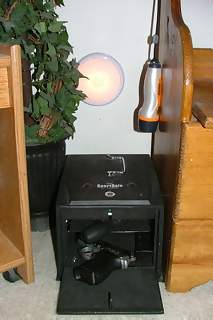
Choose a location for your pistol safe that is quickly accessible to you, but not readily visible to children or burglars.
Drill yourself on how long it takes to open your pistol safe – including drills on doing it in the dark.
NOTE: Do NOT do your drill or practice with LIVE ammunition. Remove all of your live ammunition from your storage container, and put some dummy rounds, or “snap caps” in your storage container, or in the magazines you store in that container. Check, double check, and triple check that your firearm is unloaded before doing any drills or practice. Get a second person to assist you with your drills. Have them verify that all live ammunition has been removed, and that your guns are unloaded and that only dummy ammunition is used in the drill.
If you have a pistol safe with push buttons or other electronic technologies that require batteries, test the mechanism often, and change your batteries often. Perhaps coincide this with your schedule for changing your smoke detector batteries. (You DO have smoke detectors, right?)
Put a low intensity battery powered light near your handgun safe. This provides a quick way to get low level illumination on the safe so that you can see the buttons, and helps provide light in the immediate area so you can open your safe. I use one of those big push-button closet lights. You push the large dome for the light, and the light comes on. It is very low intensity so as not to hurt my eyes, but so that I can see the safe and the immediate area.
Put a high intensity flashlight inside of or in the immediate vicinity to your pistol safe. This will help you illuminate the area in front of you to make sure you are only aiming at the bad guy and not a family member. The high intensity light will temporarily blind the intruder as well.
When you travel, if you do not take your ready handgun with you (some states do not recognize your CCW permit), then take your handguns out of the handgun safe, unload them, and put them in your gun storage vault. Put the ammunition in your separate ammunition storage container.
Wrapping It All Up:
Safety versus accessibility, when it comes to firearms, involves a great deal of consideration and risk analysis. On one hand, if firearms are not secured, even though they may be highly accessible, unauthorized people can gain access to them. On the other hand, if secured too tightly, you may not be able to access and use them when needed during a home invasion or other personal attack.
Food For Thought: If someone breaks into your house, and you end up in the same room, it takes the average intruder only one and a half seconds to reach you from a distance of twenty-one feet away.
As I mentioned before, “unauthorized people” can be a child who finds the gun and decides to play with it, or a criminal who has broken into your house and steals your firearms. It is important to remember that safety not only applies to household members who could inadvertently hurt themselves, but also to criminals who steal your firearms and do harm to others. I certainly don’t want to be the one who is responsible for hurting a child, and I especially don’t want to be the one who enables a criminal with a new tool (my firearm) to use for committing their crimes and other acts of violence.
Use defense in depth! Build layers of protection around yourself and your firearms with good household locks, personal awareness, home security strategies, and common sense. Take an NRA Personal Protection in the Home course or attend an NRA or Refuse to Be a Victim seminar. In our NRA developed and approved courses, we will teach you how to have a plan, practice the plan, and use common sense to keep yourself and your family safe. These courses cover such things as designating a safe room, keeping your firearms secure yet accessible, and how to be aware of your surroundings.
Firearms security versus accessibility means practicing risk analysis to avoid risky practice. Practicing your methods and strategies is vital to successful deployment in a crisis situation. Having a plan and being able to react quickly can save your live and the lives of others. Your personal safety and the security of your family depends on it!
In this article I would like to discuss an aspect of gun ownership that
many folks in other parts of the country take for granted, and probably don’t even have to think about too much: Defensive gun ownership
rights – specifically, the concept of being able to
own or even carry a concealed handgun for self
defense. In most other states, people have the ability to apply for, and obtain concealed carry permits for the purpose of carrying a handgun for self defense. And to this day, despite 2nd Amendment victories won by the cases of D.C. versus Heller, and Chicago versus MacDonald, the people of Washington D.C. still find themselves facing difficult hurdles in order to even own a firearm, much less carry one. The city council, and especially the Washington D.C. Police Chief are still of the opinion that if these folks aren't allowed to have guns, that all the crime will magically disappear. Well, it hasn't yet (D.C. is one of the highest crime cities in the U.S.), and the Washington D.C. police do not have the resources to protect every single individual.
I realize how much I take my own concealed carry permit for granted every time I find myself in
Washington D.C. on business. When I have some down
time, my mind wanders and I find myself comparing
the culture in this part of the country to the
culture we enjoy in Colorado. While there on one particular trip, I was
often asked by friends and colleagues what I did for
fun the afternoon or evening before. My response was usually
along the lines of walking the National Mall (before sundown) and
looking at the monuments – I love seeing our national
monuments, and take the time to visit them every
time I am there.
The response:
“You
didn’t walk the National Mall at NIGHT, did
you?!”
Well – no, but why would they ask
such a thing?
“
"Because it just
isn’t safe!”was always the answer. Well – I knew that,
thus my decision for not doing it.
Well – let’s talk about that for a moment. It’s not
SAFE to walk the National Mall in Washington D.C.!
And this sentiment in a city where the Police Chief,
City Council, and Mayor have all made it clear that
they do not like the idea of citizens being armed.
But yet the Supreme Court has ruled (in the case of
D.C.
versus Warren and others) that the police do not
have an obligation to protect individual citizens.
My perception of how dangerous this city is can
always be further perpetuated by the events of many
late afternoons, when I am walking around the city,
and there are police sirens whaling every so often,
followed by something looking like a bomb disposal
vehicle, followed by fire engines. “What the heck is
going on here?” I have often thought. Why isn’t this
place safe? What causes a place like this to be
widely considered dangerous to walk around at night,
but yet those charged with protecting it would
regard armed law abiding citizens as a bad thing?
In talking with a few of the locals, I most
assuredly have my impressions confirmed that
Washington D.C. is just widely regarded as having a
high rate of violent crime. Now this is not
something new – I know that many of you have heard
this all before. But what occurs to me every time I
come here is that there is a very simple
explanation: Citizens are not allowed to have guns
for self defense, either in the open, concealed, or
just locked in the trunk of their cars. Until last
year, handguns where completely outlawed. But even
though the Supreme Court has ruled the bearing of
arms to be a right that these citizens should enjoy,
the city leadership has been throwing up roadblock
after roadblock towards allowing these people to arm
themselves and put the violent criminals on notice
that they want to defend themselves.
Washington D.C. is not unique in this. Cities like
Chicago, New York, and some other large metropolitan
areas also have very restrictive gun laws, and
citizens are deprived of the right to carry
concealed weapons or in many cases even own them.
What do they also have in common? Very high rates of
violent crime! The economy is certainly having an
effect on the increase in violent crimes every
where¸ but when criminals know that their victims
cannot fight back, they are further enabled and feel
emboldened to commit these crimes. And in this city
in particular, it is even illegal to carry knives
and pepper spray. So basically, everyone except the
criminals, is rendered completely defenseless.
What does this mean to us as United States Citizens?! We’re all
voters! With some very important elections coming up
in 2012, we need to start NOW in looking
for state candidates who will help protect our
rights to bear arms, to ensure that Colorado will
continue to enjoy the rights we have now with no
further erosion of these rights, and national
candidates who will take this message to Washington
D.C. The current administration is moving at a
furious pace to change our country – I am wondering
how long it will be before our “privileges” of
concealed carry disappear, and our RIGHT to keep and
bear arms is taken away for good. Get involved, get
the word out, and wake your fellow Americans up.
Concealed Carry Bill Fails:
National Concealed Carry Reciprocity Fails—But What
Is Behind The Scenes?
The John Thune (R—South Dakota) Senate bill to allow
concealed carry (CCW) reciprocity nationwide failed
to overcome a procedural hurdle and get out of
committee. According to the NRA Institute for
Legislative Action:
“By a 58 to 39
majority, the US Senate voted last week to let
concealed handgun permit holders carry handguns
across state lines. Yet, it was two votes short
of the 60 needed to overcome a filibuster. The
legislation sponsored by Senator John Thune (R,
SD) would have allowed reciprocity in
permitting, as anybody would still be required
to obey the laws of the states that they travel
in. This is the same way driver's licenses
work.”
Perhaps there was more to this bill’s failure than
is evident on the surface, and there are other
reasons why the bill failed despite a majority being
in favor. From Dudley Brown, Executive Director for
National Association for Gun Rights:
“It wasn't a
"lack of unity" in the Republican party that led
to the Thune amendment's 58-39 demise: The Thune
amendment was never supposed to pass.The entire
process was calculated to fail … but only after
dozens of anti-gunners on both sides of the
aisle could exploit the chance to dissemble on
the record as gun rights supporters.It's
Washington politics at its finest -- voting
"yes" on an ostensibly pro-gun bill orchestrated
to die just short of the needed number of votes,
but that could still be used to dupe
constituents.”
That doesn't surprise me a bit! Colorado Senators
Bennet and Udall, two of the most extreme liberal
Senators in office, both voted "YES" on this bill.
They were dissembling, of course. NO doubt a ruse to
make us think they supported our gun rights. I'm
sure Reid coached them on how to vote. D'ya think?
There is no doubt that CCW privileges have come
under fire from many in the gun control community.
And in practically all of the cases of opposition,
the fears and worries that would cause support for
CCW to fail are unfounded. For example, some of the
politicians had this to say about this bill:
“Sen. Frank
Lautenberg (D, NJ) warned
it is an "attempt by the gun lobby to put its
radical agenda ahead of safety and security in
our communities." Sen. Kirsten Gillibrand (D,
NY) calls it a "harmful
measure"
that will put the public at risk. Senator Chuck
Schumer (D, NY) said:
"It could reverse the dramatic success we've had
in reducing crime in most all parts of America."
As all of us who carry are well aware—the fears of
the streets “running red with blood” that would
surely have come about by CCW permitted citizens
never came to pass. And the political wrangling that
goes on to help politicians in danger of re-election
in their districts, instead of addressing the real
issues is something we should all be concerned with.
The actions that took place behind the scenes on
this bill should serve as a warning that we should
be watchful of any future CCW related legislation,
and ensure that our representatives are voting with
reason instead of out of fear of losing voter
support.