Bullseye discipline shooting and defensive shooting are very different with regards to the dynamics involved (obviously), but also in what is referred to as acceptable accuracy. As Mike mentions in the video, putting holes in a small group on paper targets for a score is a lot different than putting effective rounds into a bad guy to stop a threat. This video provides a pretty good discussion of the difference between bullseye accuracy and defensive (combat) accuracy. The idea is to stop the threat. More hits to an acceptable level of accuracy within an acceptable are (i.e. "center mass") creates more likelihood of incapacitating a threat.
I have worked with defensive shooting instructors who espouse the "other" theory of defensive shooting, that of putting all defensive shots into nearly the same place. The idea of that philosophy is to create a larger wound cavity in a single place, and a single vital organ. And then there are others who believe that shooting at a faster cadence, placing more rounds on the target with the highest delivery speed that will allow for accuracy, will be more effective in stopping a threat. In other words: Putting all shots into as close to a single hole as possible, versus spreading more shots out over a critical area.
But I personally adhere to and teach the philosophy of combat accuracy with a greater shooting cadence versus the idea of trying to put defensive shots all in the same hole. Getting a lot of shots off faster, but still having the marksmanship to put them all in the acceptable accuracy zones (in my humble opinion) will increase the likelihood of putting rounds into vital areas and stop the threat.
Whichever you decide to use, remember to practice, practice practice. Practice both and see which one works for you. Remember: In a crisis situation, you will never rise to super-star performance. You will always fall back to your level of training.
Over the years, I have had the good fortune to train with a wide variety of firearms and tactical instructors, and have learned efficient and effective gun-handling techniques from each and every one of them. The instructors that I have worked with and trained under include law enforcement, SWAT Team Leaders, NRA civilian instructors, a former Navy SEAL, and even a former Army Delta Operator. Each has their own style, and each has preferences for things such as stance, grip, front-sight focusing techniques, ready positions, malfunction clearing, and how to rack a slide.
While one Sheriff’s Office SWAT Team who instructed in one of my classes was a proponent of the over-hand method for racking a slide, the Delta guy was a big fan of the “pinch” method. The SEAL taught us the high compressed ready position for moving about and looking for threats, while many of the Army guys I trained with were taught the SUL position. Most all NRA civilian instructors that I know teach the “tap, rack, bang” method for dealing with malfunctions, while the SEAL taught us the SPIR (Slap, Pull, Inspect, Release), then assess for threats method. Rob Pincus, a law enforcement, and Personal Defense Network instructor teaches a point shooting method for aiming at a target that does not involve front sight focus at all, while many other law enforcement and NRA instructors I have worked with insist on front-site focus all the time. And the Israeli instructors seem to teach completely different methods for everything all together.
The great value of receiving training from people who all do things differently is that you get to experience different techniques and hear different perspectives about what worked for them and their teams. But at the end of the day, you need to find out what works best for YOU, and what will make you a better shooter and (should the worst happen) a winning gun-fighter. So a few tips that I have learned over the years that have helped me:
Go into the training with an open mind and a willingness to perform to the techniques being taught.
Practice what is being taught and HOW it is being taught by that particular instructor.
Try (at least for that moment) to forget what has been taught in previous classes, and be willing to learn a new way of doing things.
Then, be able to pull everything back together and reflect afterward on what you have learned from a variety of people to put together your own menu of options that you will put into your personal training routine.
These are perishable skills. Each technique requires constant practice for the buildup of muscle memory needed in order to master them. The problem is that when you go into training that teaches a different technique than you’ve already learned, you will have a tendency to use what you are already practiced in and familiar with. So don’t take it personally when the new instructor corrects you into doing it the way that is being taught in THEIR class. The purpose of learning new things is to find out what works for you and what doesn’t. You actually have to cheerfully accept the discipline that comes with these corrections to practice the movements in order see if the tools they are teaching to you are things that you want to (or even can) put into your own toolbox.
There is no law that says that when you pick your techniques that you only have to pick ALL of the techniques from only ONE particular class or instructor. In other words, just because you learned something that works best for you from one instructor, it does not mean that you have to use ALL of the techniques from THAT instructor and not any of the others. For example, I prefer the SPIR malfunction clearing methods that I learned from the SEAL over the tap/rack/bang method that the NRA people teach. I alternate between the “pinch” and “overhand” slide rack techniques, depending on the necessity of the situation and arthritis in my hands. I practice both. The holster draw that I learned from the Delta guy seems more efficient and more natural. I am now practicing a slide release after reloading technique that an Israeli instructor teaches because that one makes more sense to me for shaving those precious fractions of a second off of a critical movement that will make a difference in competition or, heaven forbid, a gunfight. Some of the Israeli gun handling techniques, while unusual from what I have already learned, are worth it to me to look at and practice because they make sense also.
So the bottom line here is that you have a lot to choose from. If your instructors are reputable and have actual real-world experience, then it is safe to say that what all of them are teaching you is based on some pretty sound principles and tactics. Pick which of the techniques from each area (and from each instructor) that work best for you (stance, grip, malfunction clearing, aiming, racking a slide, etc). Practice your chosen techniques until you have complete mastery and fully developed muscle memory for them.
I honestly hope that none of us should actually get into a gunfight. But if (when?) we do end up in one, we will not suddenly be able to rise to the ability of super-star combat warrior gun-fighting techniques. We will always fall back to our level of training. So we must make sure that our training includes many different perspectives, we should practice each of them over and over, and then pick the one that works best. Then, practice some more until it is second nature and our level of training makes our natural actions as highly perfected as possible. Learn and practice a wide variety of skills from each area, but master to perfection the skills from each area that will serve you the best. Whether it is in competitive shooting or an actual emergency scenario, using consistent and thoroughly practiced gun handling skills will help you win.
As the saying goes: professionals don’t practice until they get it right. They practice until they can’t get it wrong.
This past week has certainly been
one of tragedy. My heartfelt prayers and
thoughts certainly go out to the victims, the families and the people of my
home town of Aurora, CO. I was in high
school when the Aurora Mall, where the theater is, was brand new. And the
apartment of the alleged gunman is just down the street from where I went to
junior high school. The apartment
evacuees were relocated to my old high school.
But what really is disappointing to me (not surprising, but disappointing),
is that the gun control wonks are coming out of the woodwork to use the blood
of these innocent victims as a means for forwarding their agenda. So, since everyone else is “Monday morning
quarterbacking” this massacre, I thought I would jump on the bandwagon as
well.
That theater was a “gun free
zone.” More massacres have been
successfully carried out in gun free zones than at places where good people
were allowed to carry their gun. Virginia
Tech, the 2008 Chicago Mall shooting, and Fort Hood, just to name a few, are
stark examples of this point. On the
flip-side, just take a look at the New Life Church incident in Colorado Springs
a few years ago. The gunman was armed similarly
to the Aurora shooter. But an armed
woman was present and took him down before he could cause more than only a few
casualties. I carry all the time for
that very reason.
Without an armed person present, those people had
ZERO chance. With an armed person
present, their chances sure as heck would have been greater than zero!
On a Facebook discussion thread
there was a comment made that one armed person in that theater could not have
stopped the gunman. That's a perfectly valid point. While it may be true (that one armed person
may not have stopped the gunman), one armed person would have distracted the
gunman long enough to allow more people to escape, or for others to take
action. It doesn't take much to
distract a gunman who is as narrowly focused as this guy was. He was focused on
killing as many people as he could. What I am talking about here is the concept
that I wrote about in a previous article of getting off of
your "X" and putting the bad guy on his
"X." The other concept alluded to here is what we in armed
self-defense circles call “gaining the half-second advantage.” If you can distract the bad guy for even half
a second, you can at least do something to take swift action and change the
outcome - hopefully to a good outcome.
Yes, he had body armor. But, as the
media likes to spin things, they called it a "bullet proof vest." There is no such thing. Different levels of body armor can protect
against certain levels of ballistic performance, but no body armor is
completely bullet proof. And depending on what he had, it is quite possible
that he only had a low level of ballistic protection. This guy didn't seem to know a whole lot
about guns, to be honest. So it isn't a
far leap to say that he probably knew even less about ballistic protection. An armed person would have tried to at least
penetrate the body armor, and if that didn’t work try for a more vulnerable
area. At that distance (within that
theater - a movie theater is way less than 25 yards), a head shot with a
handgun is not out of the question. A proficient person with a handgun could
have stayed concealed just long enough to un-holster and get a well-aimed shot
off, then move to become a huge distraction to the shooter and attempt to take
him down. Either way, if the gunman had
someone shooting back at him, he wouldn’t have been trying to shoot the people
who were trying to escape.
This why I am an armed citizen
The bottom line here is that the gun control crowd has got to finally realize
that gun-free zones DON’T work, and allowing citizens to practice their right
of self-protection DOES work. This has
been proven time and again. Most sheepdogs
I know are well trained to keep moving, and find shots that have a low
perceived penalty for a miss. The shooter's main threat at that point would be
the moving sheepdog with the gun that is shooting at him, so he wouldn't dare
turn his attention to anyone else. Many more people would then be able to
escape.Top of
Form
Bottom of
Form
So what can you do to be more
prepared? Take some form of “Active
Shooter Response” training. Even if you
don’t carry a gun, this type of training will give you a good foundation of
things to think about to increase your chances of survival. I took some of my training through the FEMA Independent Study Institute, and I refresh the training annually. For those of you who do carry a concealed
handgun, I also encourage you to keep up on your live-fire training and keep
those skills sharp. See my previous article about the need for continuous training to learn more ways
to stay polished.
This was a horrible event. But let’s not continue to enable future
similar events with more criminal enabling “gun free zones” and this insane
insistence on taking away people’s rights to self-defense. If guns were banned, he would have found
another way to cause harm. As Charlton Heston
once said:
"Here's
my credo. There are no good guns, There are no bad guns. A gun in the hands of a bad man is a bad
thing. Any gun in the hands of a good
man is no threat to anyone, except bad people."
I recently had the opportunity to go back for some excellent tactical training - low light pistol operator course at The Makhaira Group. Excellent course - I highly recommend it. So anyway - I’m not sure exactly what prompted the comment, but I recently mentioned to someone that I had just taken some formal tactical firearms training to refresh my own skills. That prompted the comment: “Tactical training?! Why in the world do you need tactical training? You’re not a police officer or a member of the military special forces!” That’s true. I’m neither of those things. And I’m pretty sure I won’t be gearing up to storm a hardened complex or rescue hostages any time soon. But I am a “Sheepdog” - a concealed carry permit holder who loves his fellow citizens, and knows that I may very well be present someday in a crisis situation. If I am present in such a situation (and the police are not), I want to make a difference and help preserve innocent life while waiting for the police to arrive. Because of my commitment, I carry a concealed firearm for self-defense nearly always (except at work and when I’m in the shower). I have made the commitment to protect my family, my neighborhood, and the members of my church. That being said, I then also have an obligation to be proficient and have the ability to be as effective as possible if the opportunity for using my firearm in self-defense presents itself. And to be honest, standing on a line in front of static paper bulls-eye targets in no way represents the types of situations encountered in real-world self-defense crisis situations.
The obligation: First, let me say this about the requirement for training: I do not believe it should be mandated by law. The obligation to be proficient in firearms handling is a moral obligation, and each person needs to make the decision for themselves as to what level of training they think will give them the proficiency they need for their particular circumstances. But if I am going to be a "Sheepdog" - one who is willing to be present in a crisis situation and I am armed, I then I feel that I have the duty to not be the cause of harm to others or myself. If I freeze up, hesitate, or simply don’t know what to do, my chances of causing more harm are much greater. This can lead to a whole variety of legal implications for me, or even more serious physical and emotional implications for all those present at the scene. My goal then is to render aid to others, preserve life, protect the innocent, stop any imminent violence by the bad guys, and be an effective resource for the police who eventually arrive to investigate. Again, I submit that performing proficiency training that involves standing on a line and shooting at static paper targets in no way prepares me to do any of the above. But if I am engaged in a training regimen that teaches the concepts of moving, shooting, communicating, and making sound, decisions, my ability to be effective and prevent further harm greatly improves. Tactical training provides just that environment, plus it provides a multitude of "stresses" that static target shooting does not provide.
"The sheep generally do not like the sheepdog.
He looks a lot like the wolf. He has fangs and the capacity for violence. The
difference, though, is that the sheepdog must not, can not and will not ever
harm the sheep. Any sheep dog who intentionally harms the lowliest little
lamb will be punished and removed. The world cannot work any other way, at least
not in a representative democracy or a republic such as ours." - LTC Dave
Grossman,
"On Sheep, Wolves, and Sheepdogs"
Enter a piece of terminology we in the self-defense circles fondly refer to as “getting off the X.” If someone is attacking you, and you stand there like a statue, you will get injured or worse - shot. It’s as simple as that. But if you move and make quick, decisive actions, your chances of winning the fight and avoiding injury are greatly increased. And if you can get the bad guy to “stand on his X,” then you further increase your chances of winning and stopping the attack. The “X” is the place that gives an adversary static predictability. In that case the person on the X might just as well be a paper target – easy to hit, and sure to be injured. Your goal is to stay off of your “X” and put the bad guy back on his.
(Example Tactical Training Course Activities)
So what is out there in the way
of tactical training, and what does the term “tactical training” actually
entail? Tactical firearms training, hand-to-hand (or “empty hand”) training,
and sporting competitions all lend themselves well to this idea of tactical
training to address immediate threats. The word “tactical” simply implies
trying to make decisions to help meet an immediate or short term goal. The
immediate goal in this case is that of stopping a bad series of gravely harmful
events. Tactics nearly always involves movement, quick decisions, and having
contingencies. Tactical training does not always mean donning forty-five pounds
of web gear and playing Rambo. Receiving tactical training means training for a
variety of events and environments, and with a variety of methods, skills, and
tools.
Tactical Firearms
Training: If you’re going to carry a gun for self-defense,
you need to be able to deploy it beyond the paper targets at the pistol range.
This can (and should) involve a variety of formal training environments where
actual experts in this field of study are there to give you real-world
insights. In Northern Colorado, we have one excellent resource at The Makhaira Group. Gunsite Academy (located
in Arizona), Front Sight (located in
Nevada), and Suarez International (various training venues) are all excellent examples of
well-renowned and affordable firearms training venues to help you sharpen your
tactical skills. The key here is formal training from experts in their
field. Get a professional set of eyes (not your well-meaning buddy) on your
techniques and use the guidance of a disinterested third party to improve your
tactics through professional instruction, and honest criticism and opinion.
Hand-to-Hand Training: Often referred to
as “open hand” training. You may not be able to draw your gun, you may not have
your gun with you (shame on you!), or the firearm may just not even be the
appropriate level of response. Tactics involves a variety of tools. Knowing
how to stop an immediate threat through a variety of means, even your own body,
is an important aspect of being willing to be that “Sheepdog” in a crisis
situation. If you’re going to step up to help out in a crisis situation, you’re
going to get hurt. That’s a fact. This type of training will not only help
build skills to employ various empty handed defenses, but will help condition
your body to be ready and will help make it “hurt” less. See your local health
club, self-defense school, or other types of activities in your area. There are
a variety of video courses that you can take, but the actual physical practice
is irreplaceable.
Shooting Competition
Activities: There are a wide variety of firearms
recreational and sporting activities that lend themselves well to the idea of
thinking on your feet and practicing tactical movements. IDPA, defensive
pistol, and even steel challenge competitions fit right in with this category of
training. Many shooting ranges even offer “combat leagues” and other dynamic
events. Here in Northern Colorado, the Northern Colorado Rod and Gun Club
hosts International Defensive Pistol (IDPA), Defensive Pistol, and Steel
Challenge matches monthly. Participation is open to the public, and
participation fees are minimal (usually $10 dollars). Not only are these events
dynamic, but they are well attended, and you can meet many others who are trying
to build up their skills and you can share ideas.
Professional
Reading: You heard me right! I know reading doesn’t sound very
“tactical.” Do some homework and find out what’s going on out in the real
world. All those “armed citizen” reports and such are chock full of real-life
examples where someone defended themselves successfully (or tragically not), and
have some very detailed descriptions of what was done right, what was done
wrong, and lessons learned for improvement. Learn from others. Monthly
magazines from professionally written sources such as the US Concealed Carry
Association (USCCA) and the National Rifle Association (NRA), for example, have
sections devoted to reporting on these incidents and can provide valuable
insight into what others went through. Those publications also have a plethora
of well written articles that talk about holster and concealment techniques,
equipment suggestions, and additional training ideas.
Regardless of how you choose to do it, you need to “get off the
X” and make additional training an ongoing endeavor. Tactical skills tend to
diminish rapidly as they are largely a matter of muscle memory and ingraining
behavior so that it becomes second nature. To keep skills sharp, you need to
continually practice and get training in updated techniques. Getting off of
your X may mean being able to putting bad guy back on his X in a crisis
situation. There are no points for second place in this game – you need to be
in it to win it.
Choosing
to be an armed citizen takes a lot of thought and
preparation, not to mention the right equipment:
Why are there no mass shootings at firing ranges?
What is it that makes a
normal, every day computer geek who lives in a
small town decide to carry a concealed weapon?
After all, the town I live in is not an
extraordinarily high crime area. I live in a
good neighborhood and work in a fairly secure
building. I have a family, two dogs, a bunch of
mundane hobbies, and I don’t purposely hang out
in dangerous areas. I have never personally
witnessed a crime, and have never been the
victim of an armed criminal. Although I have
noticed that the local mall, even in this small
town, seems to attract the dregs of society that
hang out there with nothing to do except size up
other people and decide who to harass – but
that’s another part of the story.
A decision to carry a concealed weapon, after
all, carries with it an awesome responsibility –
why would I decide to be responsible for the
myriad of issues that comes with it? By deciding
to carry a concealed weapon I have decided that
I am willing to take a human life if necessary.
I have decided that I am willing to be put in
the position to quickly decide in an emergency
situation whether or not to run, shoot, or even
if my decision will be the correct (and legally
defensible) one. Finally, this decision carries
with it a notable change in lifestyle.But despite all that, I made a conscious
decision to carry a concealed weapon. In this article,
I would like to document and share my decision
making process with you to help you understand
what makes a normal citizen make such a
potentially life changing decision. This article will chronicle the decision making
process, the social responsibilities of carrying
a concealed weapon (as I understand them to be),
and the significant lifestyle changes that one
goes through once getting the permit and
carrying a firearm.
Making the Initial Leap:
First, I’ll tell you a little bit about the
“how” of my decision making processes. This is
not, or certainly SHOULD not be an easy
decision. In my case, it took a great deal of
thought, prayer, research, and certainly
training. Thought and prayer in this decision
were the easy part. I felt that if I placed my
trust in the Lord’s hands, that He would guide
me toward the answers – and I believe He did.
Faith that God designed us to be responsible for
certain aspects of our lives, self defense being
one of them, led me to what I believe is the
right conclusion about carrying a weapon during
my daily life.
For the research, I consulted many sources,
among which being the National Rifle
Association, the U.S. Concealed Carry
Association, and various other Internet
discussion forums. Then, there are numerous
blogs, discussion forums, and news sources
documenting the many instances where an armed
citizen was able to save themselves and others
around them by carrying and calling upon their
weapon.
For the training, I relied partly on my prior
experiences handling firearms, which told me
that constant training is always needed. It
started out as a venture to take my spouse to a
basic pistol course, to get her familiar with
firearms, and to pick up new insights on
concealed carry for myself. From there, training
evolved into regular visits to the range,
getting involved in competitive shooting events,
and constantly reading articles and books from
noted authors on concealed carry and self
defense. Training and gaining new knowledge
about firearms and self defense is a daily part
of my routine these days.
Now for the seemingly more philosophical yet
most important part - the “why” part - of this
whole decision process: It has become painfully
clear to me that even in a small town like the
one in which my family and I live, there are
still bad people who wish to do others harm. We
still hear about home invasions, store
robberies, people getting robbed in their own
driveways, and various other violent crimes,
right here in our part of the state! A major
city with noted gang activity is not far away –
it is only a matter of time before the criminals
get bored and decide to take their show on the
road. And because I have a spouse, children, and
two dogs, all of whom I love very much, I am
willing to protect them. My willingness to
protect them includes using deadly force if
necessary.
The Philosophy and the
Reasoning:
My willingness to protect my family goes beyond
a mere philosophical need to prove that I am a
good person and provider, however. I believe
that I have a personal responsibility to protect
them and provide for their safety. This
responsibility is found in Biblical teaching,
and further rooted in my own beliefs. The
Supreme Court has made it perfectly clear that
the government and police have no obligation to
protect us as individuals (a noteworthy example
being the 2005 case of
Castle Rock versus
Gonzales). In a more
recent case in Madison
Wisconsin, a young woman (student) was slain. She had called 911 but her call for help was ignored, the 911 operator hung up, and police were never called to investigate. So I am responsible for myself as an individual, and for my family as individuals. I accept this. I am perfectly willing and able to take on this obligation and do my part.
Why do I carry a concealed weapon? THIS is why!
But I feel this
obligation even transcends my obligation to just
my family. Research has shown that areas that
have more armed citizens experience fewer
violent crimes. The more armed citizens there
are the more uncertainty the criminals have. Who
is carrying a weapon and who is not? This
dramatically increases the criminal’s risks of
being stopped, injured, or even killed during
the commission of their crime. Studies by people
such as Dr. John Lott have shown that an entire
community is safer because of the population of
people who carries concealed weapons. In fact,
even noted anti-gun advocate and University of
Pennsylvania professor David Mustard has had to
admit that citizens who carry do not add to gun
violence and do in fact make their communities
more safe:
"When I started my research on guns in 1995,
I disliked firearms... My views on this
subject were formed primarily by media
accounts of firearms, which unknowingly to
me systematically emphasized the cost of
firearms while virtually ignoring their
benefits. I thought it obvious that passing
laws that permitted law abiding citizens to
carry concealed firearms would create many
problems. But research has convinced me that
laws that require right-to-carry permits to
be granted unless the applicant has a
criminal record or a history of significant
mental illness reduce violent crime and have
no impact on accidental deaths."
Source:
"Culture Affects Our Beliefs About Firearms,
But Data Are Also Important," 151 U. Penn.
Law Review, 1387, 2003
I want my family to be
safe, but beyond that, I want my entire
community to be a good and safe place to live.
If my carrying a concealed weapon contributes to
the uncertainty and uneasiness that the criminal
vultures feel about committing crimes in my
community, then I am not only perfectly happy
with that, but I feel that I am part of the
solution and not just a passive bystander to a
greater threat.
The Practical Side of
Carrying a Weapon:
By the way - this isn’t by
any means meant to be a recipe for others to
follow. My strategies won’t work for everyone.
And there are far greater numbers of experts out
there who can tell you more about tactics,
training, and self defense than I could ever
hope to. Rather, I hope to give some examples of
some things that have helped me, and to help you
decide for yourself what will work best for you.
So now that I have made
this decision, how does it affect my daily life?
Surely, one doesn’t just strap on a gun and go
walking around. There are certain places an
armed citizen can and cannot go, and certain
things an armed citizen has to do a bit
differently than before. As I mentioned before,
the decision to be an armed citizen affects not
only the person who is armed, but practically
everyone around them. There is still a lot of
fear and apprehension about guns out in the
community. Some people believe in the right to
be armed, but simply choose not to be. Then
there are others who don’t believe that citizens
should have guns at all, as well as those who
are morbidly afraid of firearms. The latter is a
result of lack of education (about firearms) and
misinformation from a biased media in my
opinion, and I will speak more to that in a
later segment in this series.
Oh, What to Wear:
A recent cartoon I saw on
the Internet depicted a person who was carrying
a concealed weapon making the statement: “Having
a concealed weapon is like wearing Power Rangers
underwear; both are very cool, but you don’t
dare show anybody.” There is a lot of truth to
that. Having a concealed weapon, in my opinion,
means that it stays concealed – period! There
are a variety of reasons, not the least of which
is that we keep our handguns concealed primarily
because it keeps the bad guys guessing and gives
us the element of surprise. Secondly, quite a
few states have “shall issue laws for concealed
carry permits, but not all of those states have
“open carry” laws. This means that if you have a
concealed firearm, it must stay concealed, lest
you be arrested for public menacing. And
finally, firearms just make some people
frightened. I submit that those fears are
irrational, but those fears are very real to
those people; why put them through needless
worry and stress? They have every right to feel
as comfortable in their surroundings as we do.
And their worry and stress tends to lead to
unwanted attention drawn to yourself, and
perhaps the requirement to explain yourself to
law enforcement when those more frightened
people freak out and call the police.
Wardrobe decisions are
just something that has never plagued me before.
I was in the Navy for twenty years – my daily
attire was chosen for me. After leaving the
service, I have been mostly a jeans and t-shirt
kind of guy. Even when I am at work, jeans and a
decent sport shirt or polo shirt are considered
appropriate for my office. But carrying a
concealed weapon means that your attire has to
support concealment. Flaunting a weapon for the
reasons that I have already discussed is just
not something that I want to do.
Colorado is an open carry state, and I have a
permit, so either way I am covered. But the
fewer people who know I am carrying the better.
In fact, when I took my daughter to the mall
recently, she had no clue I was carrying my
handgun. Concealed means concealed – it’s as
simple as that for me.
The particular handguns
that I carry at the moment both seem to be most conducive to being holstered. They are fairly small (compact, but not sub-compact), but I feel I can retrieve them from a paddle holster on my hip
better than some of the other types of holsters
I have tried. And I tried several holsters
before making this decision. I have a few other
holsters that I try from time to time. As moods
change and clothing changes, so too can the
holster if needed.
My main carry gun, the Bersa .45 UC, is large
enough, however, that an in-waist-band holster
scheme doesn’t seem to feel very comfortable at
all. The paddle holster keeps it fairly high on
my hip, but I still need to wear a long shirt or
sweat-shirt to keep it concealed. I just bought
some long shirts and leave them un-tucked –
voila! Seems to work well in cooler weather, but in the
summer I have to change that strategy a bit.
Concealment vests are a good idea, but the looks
of some of them on a person seems to scream out
“Hey! I’m carrying a gun!” I found that a photographer's vest is a good choice as photography is a popular hobby in these parts. A small fanny
pack works well when I go to the gym or am wearing sweats for a long walk or something. Sweats and exercise shorts don't usually have pockets, so it is perfectly normal to see someone in such attire wearing a small fanny pack for carrying wallet, iPod, keys, etc.
What About Other Gear:
The type of holster and
how to conceal were really the biggest decisions
I had to make. Once I chose the best way to
conceal my firearm so I could comfortably carry
it around, the big issues were over. Beyond
that, however, there are other things that I
feel are necessary. Being in the information
security biz, the term “defense in depth” is a
large part of my daily vocabulary. Securing
information takes a variety of tools to keep
networks, computers and data safe. Self defense
is really no different. A firearm is not always
going to be the best or only method for defense
from an attack.
There are many types of
attacks, and there are many types of defenses.
Criminal attacks are not the only attacks. And
certainly there are people who feel bold enough
to get in your personal space because they are
angry for whatever reason, but they aren’t
really intent on committing a violent crime. I
live in an area with lots of wildlife. We have
foxes in the neighborhood regularly. Bears and
mountain lions have been known to come down out
of the mountains, as have coyotes. There are
stray dogs as well. For example, at least twice
in recent weeks while walking my dog, some stray
dogs have attacked me and one other person near
me while I was out. My dog is small, so I picked
him up, and kicking the attacking dogs was
enough to send them off. On a walk the other
day, a gentleman and his dog were attacked by a
large dog, and the dog drew blood. If I had not
turned around to retrieve a forgotten item from
the house before the walk that would have been
my dog and me getting attacked. But had that
happened to us, would drawing my weapon and
shooting the dog been a viable solution?
Certainly not! It was simply a case of a large,
strong dog getting away from its owner. A good
shot of pepper spray would have likely turned
the dog away, and the dog would have lived. The
owner would have been upset, but that would have
been their problem. When animal control showed
up, I think they had enough to worry about
explaining how their big dog got away and
attacked someone.
The point is that a
firearm is not always the best or even most
responsible defense. Shooting a dog or their
owner, or even just shooting an obnoxious jerk
that is getting in your face, for example, will
probably land you in jail. But using the amount
of defensive force commensurate with the attack
is usually considered reasonable and prudent. If
someone refuses to get out of your face and is
getting close enough to be a threat, a shot in
the face with pepper spray may do the trick. A
potential attacker approaching in a dark parking
lot may be scared away when a tactical grade
flashlight is shined in their eyes, temporarily
blinding them. I don’t care how “bad” you think
you are – someone flashing a tactical grade
flashlight in your eyes gives you pause to think
about what else that person might also be
carrying. So carrying other defensive tools
might also serve as a deterrent in that it says
that you are prepared and willing to act – and
escalate your actions if warranted.
Having multiple tools at
your disposal is a wise decision. So for that
reason, besides the firearm, I carry other items
such as a cell phone, pepper spray, a knife, and
a flashlight. I consider these items the
absolute minimum. And the beauty is that these
additional items are relatively small, and I
don’t have to feel like I am carrying a hardware
store around in my pockets. Even if I am in a
place where I cannot carry a gun for legal or
other reasons, the other items are usually
acceptable and legal.
By choosing the right
types of self defense items, you will also have
useful tools to deploy in multiple ways. For
example, a good defensive flashlight and certain
types of pepper spray come in the same shape and
size of a kubotan stick. These can then be
easily used to jab into bony or fleshy parts and
inflict a great deal of pain in a close-in
encounter. Surefire, for example makes flashlights
which have a crenellated strike bezel which can
also be used as a close-in striking tool to
inflict injury and pain. A good tactical
flashlight will help you look inside and
underneath your car in a poorly lit parking lot,
and will also temporarily blind someone who is
approaching you.
Having defense in depth
provides a greater deal of security than simply
replying on one single tool – just as you have
many tools to do all your household chores, so
should you have many tools to provide for your
safety.
The Mental Side of Being an
Armed Citizen:
And NO – I am not referring
to anything even hinting of those of us who
carry having mental illness, being a mental
defective, or any such nonsense. In fact, all
of the gun owners and CCW permit holders I know
are at the top of the list of the most mentally
and emotionally stable people I know. Having
acute awareness and mental abilities is a key
factor in the persona who carries a concealed
weapon. Mindset is an important ingredient in
self defense, and being mentally prepared for
the worst is a part of my strategy. Thinking
about the various scenarios and knowing what
actions I will take is one of my most valuable
weapons.
In the following sections,
I would like to focus one of the most valuable
self defense weapons available – the human
mind. And while I am by no means a psychologist
or expert of emotional well being in any way (I
am a computer geek, after all), I do know that
being aware, mentally prepared, and decisive in
action is a key ingredient to survival.
Situational and
Environmental Awareness:
In all honesty, I feel that
a significant part of our society is made up of
unaware, self consumed individuals. For
example, I ride a motorcycle – and I can’t begin
to tell you the number of times I have been
cutoff and almost hit by people on their cell
phones or engaging in other activities while
driving which distracts them to the point that
they can’t even pay attention to what is going
on around them. These people can’t stop for
simple stop-signs, and even by one woman I
observed was eating a bowl of cereal (I’m not
kidding) while driving her minivan. Some people
seem to always be on their phones, and the funny
thing is, they don’t really seem to be talking
about anything earth shattering.
Then there are just those
who seem to be looking at their shoes all the
time, or are obviously in another place while
they are out and about. I have a name for these
people: they are simply the “unaware” of our
society. Unfortunately, the criminal element is
aware of these people as well, and they have
their own name for them: “Victim!”
I read somewhere that anger
has no place in the life of someone who carries
a concealed weapon. That really struck me as
profound. One of the wildest stereotypes that
the anti-gun people have of us is that we will
get angry and go on a wild shooting rampage.
Well for one thing, multitudes of studies have
shown that the “wild west” and “road rage”
aspects of regular citizens carrying concealed
weapons has never come to pass. In fact, the
more articles I read, the more I am convinced of
something I already believed; law abiding
citizens who carry weapons tend to be more
polite and avoiding of situations that would
illicit an armed response. If someone is
unhappy with me, I simply nod and walk away.
They may call me names, and they may insult me.
But that is just something that I have learned
to live with over the years. Getting into any
type of altercation, armed or not, has just
never been worth the outcomes.
So what does one do to get
rid of the stress and anger? We all get angry,
we all get stressed. And in the case of having
to walk away from a situation, it is likely that
pride and dignity will suffer to some extent.
For me, physical fitness plays an important part
of that stress relief. I’m not a spring chicken
any more, so going to the gym regularly helps to
relieve stress, but it also helps to add
longevity and quality to life. In fact, one of
the other aspects of self defense is agility,
stamina, and the ability to gain (as Tony Walker
puts it) that “half-second advantage.” An hour
in the gym and I feel totally different and
recharged.
But since I’m mentioning
stress relief, there is another technique that
my wife and I use for stress relief: going to
the range! And no, I’m not talking about taking
along effigies of our most hated co-worker or
anything like that. We participate in a weekly
shooting league at our favorite indoor pistol
range. Each week, the targets are varied, the
distances of the targets are varied, and the
scoring is varied. For about an hour a week, we
go to the range, the shooting scenario unknown
to us until we arrive, and we spend that time
concentrating on those targets and getting the
best score that we can. During that time, we
are thinking of nothing else! All thoughts of
our hectic work day have literally vanished, and
we are all consumed in having fun at the range.
We share ideas on shooting techniques, we meet
new people, and we enjoy talking with the
proprietors on the gun shop. This relates to
physical fitness also because we are practicing
new and varied ways to shoot, different types of
targets, and shooting at different ranges. In
other words, we are getting a frequently
changing look at the dynamic of shooting and
practicing with our weapons. We go home and
talk about the evening at the range and just
enjoy the fact that we have yet another activity
that we enjoy doing together. Having that
aspect of my life in solidly good shape allows
me personally to put everything else into place
as well.
Thoughts While Out
and About:
So what am I thinking about
while out there running my daily errands?
Mostly on my minds is how to be as completely
invisible as possible. I want to be the person
that no one notices. So to that end, I don’t go
out of my way to attract attention, and I
certainly don’t go out of my way to give any
clue that I am carrying a weapon. What this
means is that I am careful about how I get out
of my car, lest my firearm be exposed, and I am
aware of what other types of people are in the
area. For example, if a mother and her young
children are in the area, I especially don’t
want the youngsters seeing my gun. I know that
some people are afraid of guns, no matter how
much we have proven that there is nothing to be
afraid of, and I don’t want anyone needlessly
feeling afraid or uneasy around me. So for
those reasons alone, I am very cognizant of
making sure that my concealed weapon is just
that: concealed!
A very important part of my
thought process is in knowing where I can or
cannot go if I am carrying a firearm. I know
that some establishments don’t care either way,
while still others adamantly refuse entrance to
holders of valid CCW permits if they have
weapons. So essentially, I do the best I can to
know who has what policy, and to respect their
wishes. But I will say this about the
establishments who refuse to allow law abiding
citizens to carry their concealed weapons into
their businesses: I won’t give them my business
period. But it’s not because I think they
possess some liberal, anti-gun mind-set. It is
specifically because they have made the
statement that I am not welcome to use my chosen
method of self defense while on their premises.
If I or my family were to be in one of these
types of places, and an armed gunman appears,
they are disallowing me the means to defend
myself. They have no intention of providing for
my protection while I am there, however, as seen
by the lack of armed guards in any of these
places. Additionally, my state law makers have
made it clear to me that I cannot hold them
legally liable for damages, death, or injury if
I or my family is harmed in their “gun free”
zone.
Constantly on my mind when
I am out and about is an awareness of other
people, particularly who are the “good guys” and
who are the “bad guys.” I try not to be
judgmental, but let’s face it: you can just
tell sometimes, who are the average citizens
walking around, and who the lower forms of human
existence are. Going to the mall, for example,
it is painfully obvious who the vultures are
because you can see them sizing up everyone,
following people around, and in general looking
like they have no purpose in life other than to
find their next victim. This is the same
behavior seen on nature channels when the
jackals are sizing up their next meal. It is just obvious, sometimes, that they
aren’t there to do their shopping and leave –
they just seem to be there perpetually as if
that is their place of employment. Well,
perhaps it is. I’m suspicious of everyone, and
I spend a lot of time observing people. Unless
you are completely unaware of your surroundings,
you kind of have an idea who you can (mostly)
ignore, and who you need to keep your eye on.
Being aware is to be prepared, and being
prepared means you are watching them more
closely than the rest. The best thing I try to
do is just avoid the places where these maggots
seem to congregate the most, but sometimes what
you need is at the place where the vultures hang
out: The shopping mall and Wal-Mart seem to be
the two most likely places where the dregs of
society can be found here in my small town.
Wrapping It All
Up:
So for these reasons, and
more, I have decided to become an armed citizen.
As you can see, such a decision requires a lot
of thought, and for many people like me, is not
an easy decision. But now that I have made the
leap and obtained my permit, I have now stepped
into a new life. In the next article, I will
talk about how some of my daily wardrobe habits
have changed to accommodate my carrying a
concealed weapon, and the types of other things
that I have to think about carrying. But as you
will see, I don’t look on any of this as a
burden or an inconvenience. I look at this as a
necessary part of life as an armed citizen.
To me, carrying concealed
means just what it implies. I don’t want anyone
to know I am carrying a firearm, or any other
weapons for that matter. It is important to me
that the bad guys don’t know who is carrying –
it keeps them guessing. And I know that there
are a lot of frightened people out there who
freak out at even the mention of firearms. Why
put them through undue stress? In fact, as I am
sitting here typing this from a public coffee
shop, none of the people here have a clue that
there is an armed citizen in their midst – and I
intend to keep it that way. I’m not going to
change their minds about the benefit of being
armed in the time of our brief encounter – so
why try? Why go through having to explain to
them that their fears are irrational and that
they are safe as kittens around me? It just
isn’t worth it, but it is worth avoiding the
situation altogether.
Beyond the act of
concealment, I consider self defense to be a
matter of employing the right tools for the job.
That is why I carry a variety of self defense
items such as cell phones, a knife, tactical
flashlight, and pepper spray, and of course - my
wits.
As you can see throughout
this article, I have tried to illustrate that I
do indeed consider being an armed citizen to be
a serious and awesome responsibility. These
aren’t the ravings of some “gun nut” who just
wants to be able to carry his “toys”
everywhere. This is the mindset of a free man
who values his and his family’s safety above all
else. Self defense is a basic human right. I
owe it to my family to live a long life and
provide for their well being and safety. This
is my responsibility, not that of the
government. I don’t want to rely on anyone else
to carry out those responsibilities which are
mine alone, but at the same time I don’t want
anyone thinking that they have the right to take
my abilities to perform my duties as a
responsible citizen away from me. The founders
of our country made it clear that we were
endowed these rights by our Creator, and that
idea is still valid today. Technologies have
changed, and the population of criminals has
increased from their day, but what was spoken
then is still valid now. My right to defend
myself and my family is absolutely and
unequivocally non-negotiable!
"The only power any government
has is the power to crack down on
criminals. Well, when there aren’t
enough criminals, one makes them. One
declares so many things to be a crime
that it becomes impossible to live
without breaking laws."
One of the things that we emphasize in our firearms classes above all else is firearm safety. Of the NRA rules for safe gun handling, the third rule states “ALWAYS keep the gun unloaded until ready to use.” However, when teaching the “Personal Protection in The Home” course, we modify that third rule to tell you to always assume that the gun is loaded. The reason for that is because our personal defense gun is considered to be the “ready” or “in use” gun, and is therefore usually loaded. After all, it doesn’t make too much sense to have an unloaded gun for personal defense. Would you keep an empty fire extinguisher for kitchen fires? Safety is paramount, but we are talking about the safety and proper use of a tool that we will possibly use to protect ourselves and our families some day.
In my own household, where our youngest is a teenager, the risk of a small child accessing our guns and “playing” with them is extremely small. But what about that same teenager with nosey friends? What about burglars who break in while we’re gone? Part of my own philosophy about gun safety and responsibility says that I will not put guns in the hands of those who will intentionally do harm to others, but I will always have a firearm readily available when called upon to use it for defensive purposes. We as gun owners have as much of a DUTY to keep guns out of unauthorized hands as we do the RIGHT to own them.
So having said all that, I wanted to use this article to discuss the various aspects of home firearms safety versus accessibility. That is – the safe handling and storage of firearms versus accessibility to a “ready” firearm when you are in a crisis situation in your own home, and mere seconds count. Having a ready firearm available and accessible involves a certain amount of risk analysis. The risk of having a ready firearm that is accessible to unauthorized people versus the risk of not having a ready firearm available for self defense is a serious one and takes a great deal of consideration. And when we say “unauthorized people” this can be a child who finds the gun and decides to play with it, a nosey friend of your teenager just looking around your house, or a criminal who has broken into your house and steals your firearms. It is important to remember that safety not only applies to your own handling of firearms, but household members who could inadvertently hurt themselves, and also to criminals who steal your firearms and do harm to others.
To help illustrate this point - In my “day job” in the computer security biz, we often have to contemplate the balance between the need for keeping our computers and networks safe and our users being able to do their jobs. If we are too secure, our network will never be hacked, but our users will not be able to conduct business. If we are too lax or too open, we will be successfully attacked, our data stolen (or worse), and our business suffers greatly. To accommodate the fine balance needed between security and accessibility, we use something called “defense in depth” to make sure that we have various layers of security. Each layer is (hopefully) transparent to the end user, but presents a virtual gauntlet of protective measures that an attacker has to break through in order to get to our data.
Likewise is the risk analysis that we as gun owners have to perform when we make the decision to keep a loaded firearm in the house for personal protection. And just like the example above, we want to present a “defense in depth” of multiple security layers of protection. This article will present some different scenarios of safety versus accessibility, along with an analysis of each method’s safety versus accessibility profile. This is not meant to be an absolute recommendation of any particular safety strategy – only YOU can decide which is right for you!
NOTE: The following sections talk about doing drills and performing practice. Do NOT do your drill or practice with LIVE ammunition. Remove all of your live ammunition from your ammunition storage container, and put some dummy rounds, or “snap caps” in your storage container, and in the magazines you store in that container. Check, double check, and triple check that your firearm is unloaded before doing any drills or practice.
Strategy 1: Unloaded Handgun in the Storage Safe:
This scenario assumes the most safe and secure of all storage methods. In this scenario, we are describing the large fire-proof gun storage vault with a combination lock and/or a digital keypad. This strategy also assumes that the firearms kept inside are all unloaded, and in keeping with best practices, the ammunition is locked in a separate container. If there are young children in the house, this is by far the safest way to ensure that getting to the guns is extremely difficult, but that an unauthorized person loading the gun and accidentally hurting themselves is more difficult still. In the case of protection from burglars, this strategy makes stealing your guns and ammunition as difficult as it gets.
But what about accessibility in a home invasion situation? Can you quickly get the storage vault unlocked, and retrieve a firearm? Can you then quickly retrieve ammunition, load the gun, and make it ready for use? How long will this take you to do? In the mere seconds that it will take for a violent criminal to burst into your home and get to where you are, it is going to be very difficult to retrieve a ready firearm and protect yourself and your home.
Safety: High
Accessibility: Low
Recommendation:
If you are preparing for home defense, and accessibility is a concern, change your strategy to one that is more suitable and considers more of a balance between safety and accessibility.
If you are insistent that you are going to use this as your only storage strategy, then drill yourself to find out how long it takes to retrieve a handgun, retrieve the ammunition, load it, and be ready to use it. Practice doing this in the dark to see if you can do it, or to see how much longer it takes than doing it in the light.
NOTE: Do NOT do your drill or practice with LIVE ammunition. Remove all of your live ammunition from your storage container, and put some dummy rounds, or “snap caps” in your storage container, or in the magazines you store in that container. Check, double check, and triple check that your firearm is unloaded before doing any drills or practice. Get a second person to assist you with your drills. Have them verify that all live ammunition has been removed, and that your guns are unloaded and that only dummy ammunition is used in the drill.
Put loaded magazines or speed-loaders in your ammunition storage container for easier retrieval and loading.
Harden the target. Make sure that your home is as inaccessible to burglars as possible. Keep as many barriers between you and the home invader as possible. Those barriers might include dogs, locked doors, deadbolts, alarm systems, and a safe room in your house.
Make sure the gun and ammunition storage is in your safe room. Having a locked door between you and the person invading your home will at least buy you some time to retrieve the firearm, load it, and be ready.
Strategy 2: Loaded Handgun in the Night Stand:
This represents the other end of the safety/accessibility spectrum; from both safety and accessibility standpoints, this is in direct contrast to the strategy mentioned above. If there are no children in the house, then the risk of a small child getting to the firearms is relatively small. Your firearm is immediately accessible in case you need it. But it is also immediately assessable to unauthorized persons. If you leave the firearm in your night stand while you are out, and a burglar breaks into your home, it will be easy for them to find and steal your gun. A night stand, after all, is one of the most common places for people to keep pistols and other valuables.
Safety: Low
Accessibility: High
Recommendations:
If you don’t usually take your firearm with you when you leave the house, get a safe in which to lock up your firearms while you are gone.
Same goes for any other firearms you have in the house. Even if you don’t have a risk of children who can get to your firearms, there is still the risk of a burglar coming in and stealing your firearms.
Use some concealment methods to hide your firearms. Most burglars look for the low hanging fruit. They quickly look around for items to steal and get out before they are detected or the home owner comes home. Even if you keep your ready pistol in a handgun safe, consider concealing the safe. Many small pistol safes can be easily pried open if the intruder has a crowbar or other tools.
Strategy 3:
Loaded Handgun in the Handgun Safe:
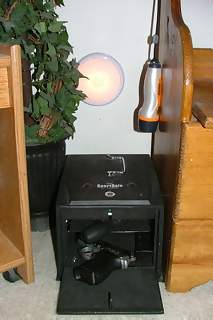
This strategy offers an excellent balance between safety and accessibility. The defensive handgun is readily accessible with the push of a few buttons, but is still locked up and secure from children and the amateur burglar. Always keeping your ready firearm in the pistol safe gets you in the habit of always retrieving your gun from that safe. In contrast to the scenario above, you develop a habit for going to that location for your defensive pistol, and do not run the risk of forgetting to move your handgun from the night stand to the safe each day when you leave. There won’t be that nagging “Did I leave my pistol out?” feeling.
Safety: High
Accessibility: High
Recommendations:
Make sure to buy a pistol safe that can be bolted to the floor or other solid structure.
Choose a location for your pistol safe that is quickly accessible to you, but not readily visible to children or burglars.
Drill yourself on how long it takes to open your pistol safe – including drills on doing it in the dark.
NOTE: Do NOT do your drill or practice with LIVE ammunition. Remove all of your live ammunition from your storage container, and put some dummy rounds, or “snap caps” in your storage container, or in the magazines you store in that container. Check, double check, and triple check that your firearm is unloaded before doing any drills or practice. Get a second person to assist you with your drills. Have them verify that all live ammunition has been removed, and that your guns are unloaded and that only dummy ammunition is used in the drill.
If you have a pistol safe with push buttons or other electronic technologies that require batteries, test the mechanism often, and change your batteries often. Perhaps coincide this with your schedule for changing your smoke detector batteries. (You DO have smoke detectors, right?)
Put a low intensity battery powered light near your handgun safe. This provides a quick way to get low level illumination on the safe so that you can see the buttons, and helps provide light in the immediate area so you can open your safe. I use one of those big push-button closet lights. You push the large dome for the light, and the light comes on. It is very low intensity so as not to hurt my eyes, but so that I can see the safe and the immediate area.
Put a high intensity flashlight inside of or in the immediate vicinity to your pistol safe. This will help you illuminate the area in front of you to make sure you are only aiming at the bad guy and not a family member. The high intensity light will temporarily blind the intruder as well.
When you travel, if you do not take your ready handgun with you (some states do not recognize your CCW permit), then take your handguns out of the handgun safe, unload them, and put them in your gun storage vault. Put the ammunition in your separate ammunition storage container.
Wrapping It All Up:
Safety versus accessibility, when it comes to firearms, involves a great deal of consideration and risk analysis. On one hand, if firearms are not secured, even though they may be highly accessible, unauthorized people can gain access to them. On the other hand, if secured too tightly, you may not be able to access and use them when needed during a home invasion or other personal attack.
Food For Thought: If someone breaks into your house, and you end up in the same room, it takes the average intruder only one and a half seconds to reach you from a distance of twenty-one feet away.
As I mentioned before, “unauthorized people” can be a child who finds the gun and decides to play with it, or a criminal who has broken into your house and steals your firearms. It is important to remember that safety not only applies to household members who could inadvertently hurt themselves, but also to criminals who steal your firearms and do harm to others. I certainly don’t want to be the one who is responsible for hurting a child, and I especially don’t want to be the one who enables a criminal with a new tool (my firearm) to use for committing their crimes and other acts of violence.
Use defense in depth! Build layers of protection around yourself and your firearms with good household locks, personal awareness, home security strategies, and common sense. Take an NRA Personal Protection in the Home course or attend an NRA or Refuse to Be a Victim seminar. In our NRA developed and approved courses, we will teach you how to have a plan, practice the plan, and use common sense to keep yourself and your family safe. These courses cover such things as designating a safe room, keeping your firearms secure yet accessible, and how to be aware of your surroundings.
Firearms security versus accessibility means practicing risk analysis to avoid risky practice. Practicing your methods and strategies is vital to successful deployment in a crisis situation. Having a plan and being able to react quickly can save your live and the lives of others. Your personal safety and the security of your family depends on it!