Showing posts with label firearm. Show all posts

URGENT: Join The NRA Today!


Shameless commercial plug - I am an NRA Recruiter and get a commission for signing up new NRA members.  But here's the deal:  Our 2nd Amendment Rights Count On It...

We need your help!  There is no doubt that the 2018 legislative session in the state of Colorado and the nation is going to be tough on gun rights.  There is still yet a lot of work to do to save our rights and our future as gun owners.  The new gun-friendly administration has been elected, but they are under fire and being attacked by those not friendly to our rights as citizens to defend ourselves.  In fact, those wishing to take back power have even promised groups such as the "Brady Bunch" that they are will work on new gun control measures behind the scenes now and enact them once they are in power.  And unfortunately, their newly emboldened base consists of some of the most anti-gun, anti-self-defense people in history. 

But we have a strong ally:  The hard work and dedication of the professionals at the National Rifle Association will ensure that we can take the fight against draconian and excessive gun control measures to those who don't want us to defend ourselves.  Watch this SHORT VIDEO about the NRA to learn more...  Then JOIN, as we move forward in 2018 to ensure that all of us enjoy our RIGHTS for responsible gun ownership, self-defense.


NRA Membership is Affordable! 

A one-year regular membership is just $30.00 per year, with savings for multiple years or life memberships.


A full membership also includes your choice of magazine subscriptions to the most informative firearms publications available today.


Additional insurance and other great benefits. 

Support the NRA through your membership.  JOIN THE NRA TODAY

You can save on a regular annual membership by joining for multiple years.  A one-year membership just $30.00.  JOIN TODAY.

The Second Amendment is second in importance only to the First!!!  Indeed, it's the Second Amendment that allows the general population to defend all the rest of them from any attempt at tyranny.

"While the people have property, arms in their hands, and only a spark of noble spirit, the most corrupt Congress must be mad to form any project of tyranny."

Rev. Nicholas Collin, Fayetteville Gazette (N.C.), October 12, 1789


The following is a quote from James Madison sixteen (16) months before he introduced the 2nd Amendment to the U.S. House of Representatives in 1789.


"Besides the advantage of being armed, which the Americans possess over the people of almost every other nation, the existence of subordinate governments, to which the people are attached and by which the militia officers are appointed, forms a barrier against the enterprises of ambition, more insurmountable than any which a simple government of any form can admit of."

James Madison, The Federalist No. 48, February 1, 1788


My Philosophy

I believe that our Second Amendment rights afford us as law-abiding citizens the ability to own firearms, and we should be able to use the tools that we see fit to protect ourselves, our families, and our property.  The immortal and often debated meaning of the words of the Second Amendment "A well-regulated militia..." was intended to mean that all citizens have the right and responsibility to bear arms in protection of self, family, and country.  "Well regulated" at the time, meant well trained and disciplined.  We believe that the meaning and spirit of those words are just as relevant today.  Our citizens should be well trained, but "...the right of the people to keep and bear arms shall not be infringed." 

"The Gonz" is a Fort Collins-based political and gun rights activist, NRA Certified Firearms Instructor, and Law Enforcement AR-15/M-16/M-4A1 Armorer, and NRA Recruiter specializing in fostering gun rights and firearms safety.  We emphasize firearms safety and are strong advocates of a law-abiding citizen's right to own firearms for self-defense, hunting, and sporting purposes.  If you live in the Northern Colorado area, please ask how I can help you with all your firearms training needs.  By joining the NRA today, you are helping me to muster the vital resources needed to ensure that these rights are here for our children and future generations to come.


Gun Control Terminology Primer


The problem with many of the gun control advocates we are hearing from right now is that they don’t even understand the first thing about firearms, much less the “features” that make them so irrationally frightened of firearms.  They want to control (more like “abolish”) that which they don’t even understand.  If a gun looks scary, they want it banned.

So for all the rabid and ill-informed gun control advocates out there – perhaps I can help you out a bit.  Here is a primer for you on the common terms and phrases you like to throw around, along with their actual meanings.

Assault Weapon:  This is a gun-grabber favorite.  “No one needs an ASSAULT WEAPON for self-defense.”  Well – here’s the deal: In order to truly be an “assault weapon,” the firearm needs to be fully automatic.  The guns you are referring to are nothing more than semi-automatic weapons made to look like their fully automatic (or select fire) military counterparts.  These guns don’t even have the cyclic rate ability to sustain the rate of fire of one of the military grade weapons.  Perhaps that’s why they jam so much when mass murdering lunatics, who themselves have little to no knowledge of firearms operation, experience so many jams.  Fully automatic weapons are extremely difficult to acquire by civilians.

Gun Control:  Why do you keep advocating for “gun control” thinking it is a way to “get guns off the streets” as you so often pronounce?  When a person is killed by a drunk driver, I don’t hear cries for “Car Control.”  How about if we practice “criminal control” or “gang control” or “illegal immigrant control” instead?  Let’s enforce already existing laws and get criminals off the streets.  This “gun control” term more accurately refers to keeping a proper grip, good trigger control, and placing shots accurately on target.  Better check the news:  The cities with the highest “gun control” in the context that you speak of (i.e. Chicago, New York, Washington DC) are the cities with the highest murder and violent crime rates.  Try again on that one.  

High Capacity Clip (Magazine):  First of all, they are not clips.  They are magazines.  At least get the terminology right if you’re going to try to legislate them.  A 30 round magazine for an AR-15 rifle is a STANDARD CAPACITY magazine.  A 16 round magazine for a Springfield XD pistol is a STANDARD CAPACITY magazine.  These are not high capacity magazines by any stretch of the imagination.  And where do people, who are lacking firearms knowledge to begin with, get off telling others how many rounds of ammunition they are allowed to have with which to defend themselves?

Military Grade Weapon:  See “Assault Weapons” above.  These civilian grade look-alikes are NOT military grade weapons.  No soldier would be caught dead with one in the field of combat.  Again - The guns you are referring to are nothing more than semi-automatic weapons made to look like their fully automatic (or select fire) military counterparts.  These guns don’t even have the cyclic rate ability to sustain the rate of fire of one of the military grade weapons.  Perhaps that’s why they jam so much when mass murdering lunatics, who themselves have little to no knowledge of firearms operation, experience so many jams.

Shooting From the Hip:  This phrase is Diane Feinstein’s favorite for why we shouldn’t have rifles with pistol grips.  Two things, dear:  1) I can shoot my hunting rifle (which doesn’t have a pistol grip) from the hip.  2)  Shooting from the hip is one type of “retention position” shooting that is commonly taught for legitimate defensive shooting purposes.  Try again.

Silencer:  Well – they are not silencers.  They are suppressors.  Why it is that suppressors made it into the list of NFA controlled items, I’ll never know.  A suppressor is nothing more than a muffler for a firearm.  In fact, suppressors make shooting safer, as they cut down on the amount of noise that can cause hearing damage. 

Well Regulated: Oh yes.  The gun grabbers like to point to the fact that the Second Amendment says that only “Well Regulated Militias” are allowed to have guns.  Either that or they say that “Well Regulated” means that we are SUPPOSED to enact strict firearms controls and regulations.  Well – this is a clear display of not only their complete lack of knowledge about firearms, but a complete lack of knowledge of the U.S. Constitution, our Bill of Rights, and our founding history as well.  “Well regulated” back in the day simply meant that the citizenry should be well trained in the proper use and deployment of firearms.  Since the militia was (and is) made up of all able bodied citizens (men back then, and I argue everyone today), then we are all responsible for knowing how to operate firearms and use them defensively.

Don’t ask me why I NEED a particular firearm, magazine, ammunition type, or anything else.  I can own them because of the Bill of Rights.  Not the Bill of Needs, the Bill of Wants, or the Bill of Desires. The Bill of RIGHTS!  Quit trying to impose “feel good, do nothing” measures to ban things that you have no knowledge of in the first place.  Do your homework and come back with an informed opinion, why don’t you?  Then maybe we can have an honest debate about gun control.  I’ll still tell you why you can’t take my guns away, but at least it will be a more informed argument for you.

Oh – and by the way – YOU’RE WELCOME! 

Defensive Pistol Storage in the Home


One of the things that we emphasize in our firearms classes above all else is firearm safety.  Of the NRA rules for safe gun handling, the third rule states ALWAYS keep the gun unloaded until ready to use.”  However, when teaching the “Personal Protection in The Home” course, we modify that third rule to tell you to always assume that the gun is loaded.  The reason for that is because our personal defense gun is considered to be the “ready” or “in use” gun, and is therefore usually loaded. After all, it doesn’t make too much sense to have an unloaded gun for personal defense.  Would you keep an empty fire extinguisher for kitchen fires?  Safety is paramount, but we are talking about the safety and proper use of a tool that we will possibly use to protect ourselves and our families some day.


In my own household, where our youngest is a teenager, the risk of a small child accessing our guns and “playing” with them is extremely small.  But what about that same teenager with nosey friends?  What about burglars who break in while we’re gone?  Part of my own philosophy about gun safety and responsibility says that I will not put guns in the hands of those who will intentionally do harm to others, but I will always have a firearm readily available when called upon to use it for defensive purposes.  We as gun owners have as much of a DUTY to keep guns out of unauthorized hands as we do the RIGHT to own them.

So having said all that, I wanted to use this article to discuss the various aspects of home firearms safety versus accessibility.  That is – the safe handling and storage of firearms versus accessibility to a “ready” firearm when you are in a crisis situation in your own home, and mere seconds count.  Having a ready firearm available and accessible involves a certain amount of risk analysis.  The risk of having a ready firearm that is accessible to unauthorized people versus the risk of not having a ready firearm available for self defense is a serious one and takes a great deal of consideration.  And when we say “unauthorized people” this can be a child who finds the gun and decides to play with it, a nosey friend of your teenager just looking around your house, or a criminal who has broken into your house and steals your firearms.  It is important to remember that safety not only applies to your own handling of firearms, but household members who could inadvertently hurt themselves, and also to criminals who steal your firearms and do harm to others. 

To help illustrate this point - In my “day job” in the computer security biz, we often have to contemplate the balance between the need for keeping our computers and networks safe and our users being able to do their jobs.  If we are too secure, our network will never be hacked, but our users will not be able to conduct business.  If we are too lax or too open, we will be successfully attacked, our data stolen (or worse), and our business suffers greatly.  To accommodate the fine balance needed between security and accessibility, we use something called “defense in depth” to make sure that we have various layers of security.  Each layer is (hopefully) transparent to the end user, but presents a virtual gauntlet of protective measures that an attacker has to break through in order to get to our data. 

Likewise is the risk analysis that we as gun owners have to perform when we make the decision to keep a loaded firearm in the house for personal protection.  And just like the example above, we want to present a “defense in depth” of multiple security layers of protection.  This article will present some different scenarios of safety versus accessibility, along with an analysis of each method’s safety versus accessibility profile.  This is not meant to be an absolute recommendation of any particular safety strategy – only YOU can decide which is right for you!

NOTE:  The following sections talk about doing drills and performing practice.  Do NOT do your drill or practice with LIVE ammunition.  Remove all of your live ammunition from your ammunition storage container, and put some dummy rounds, or “snap caps” in your storage container, and in the magazines you store in that container. Check, double check, and triple check that your firearm is unloaded before doing any drills or practice.

 
Strategy 1:  Unloaded Handgun in the Storage Safe:
This scenario assumes the most safe and secure of all storage methods.  In this scenario, we are describing the large fire-proof gun storage vault with a combination lock and/or a digital keypad.  This strategy also assumes that the firearms kept inside are all unloaded, and in keeping with best practices, the ammunition is locked in a separate container.  If there are young children in the house, this is by far the safest way to ensure that getting to the guns is extremely difficult, but that an unauthorized person loading the gun and accidentally hurting themselves is more difficult still.  In the case of protection from burglars, this strategy makes stealing your guns and ammunition as difficult as it gets.

But what about accessibility in a home invasion situation?  Can you quickly get the storage vault unlocked, and retrieve a firearm?  Can you then quickly retrieve ammunition, load the gun, and make it ready for use?  How long will this take you to do?  In the mere seconds that it will take for a violent criminal to burst into your home and get to where you are, it is going to be very difficult to retrieve a ready firearm and protect yourself and your home.

Safety:  High
Accessibility:  Low
Recommendation: 
  • If you are preparing for home defense, and accessibility is a concern, change your strategy to one that is more suitable and considers more of a balance between safety and accessibility.
     
  • If you are insistent that you are going to use this as your only storage strategy, then drill yourself to find out how long it takes to retrieve a handgun, retrieve the ammunition, load it, and be ready to use it.  Practice doing this in the dark to see if you can do it, or to see how much longer it takes than doing it in the light.
NOTE:  Do NOT do your drill or practice with LIVE ammunition.  Remove all of your live ammunition from your storage container, and put some dummy rounds, or “snap caps” in your storage container, or in the magazines you store in that container. Check, double check, and triple check that your firearm is unloaded before doing any drills or practice.  Get a second person to assist you with your drills.  Have them verify that all live ammunition has been removed, and that your guns are unloaded and that only dummy ammunition is used in the drill. 
  • Put loaded magazines or speed-loaders in your ammunition storage container for easier retrieval and loading.
     
  • Harden the target.  Make sure that your home is as inaccessible to burglars as possible.  Keep as many barriers between you and the home invader as possible.  Those barriers might include dogs, locked doors, deadbolts, alarm systems, and a safe room in your house.
     
  • Make sure the gun and ammunition storage is in your safe room.  Having a locked door between you and the person invading your home will at least buy you some time to retrieve the firearm, load it, and be ready.
 
Strategy 2: Loaded Handgun in the Night Stand:
This represents the other end of the safety/accessibility spectrum; from both safety and accessibility standpoints, this is in direct contrast to the strategy mentioned above.  If there are no children in the house, then the risk of a small child getting to the firearms is relatively small.  Your firearm is immediately accessible in case you need it.  But it is also immediately assessable to unauthorized persons.  If you leave the firearm in your night stand while you are out, and a burglar breaks into your home, it will be easy for them to find and steal your gun.  A night stand, after all, is one of the most common places for people to keep pistols and other valuables.

Safety:  Low
Accessibility:  High
Recommendations:
  • If you don’t usually take your firearm with you when you leave the house, get a safe in which to lock up your firearms while you are gone.
     
  • Same goes for any other firearms you have in the house.  Even if you don’t have a risk of children who can get to your firearms, there is still the risk of a burglar coming in and stealing your firearms.
     
  • Use some concealment methods to hide your firearms.  Most burglars look for the low hanging fruit.  They quickly look around for items to steal and get out before they are detected or the home owner comes home.  Even if you keep your ready pistol in a handgun safe, consider concealing the safe.  Many small pistol safes can be easily pried open if the intruder has a crowbar or other tools.
 
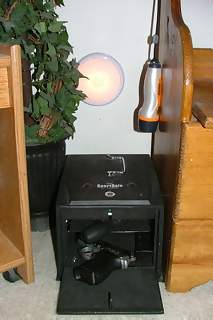
Strategy 3: Loaded Handgun in the Handgun Safe:
This strategy offers an excellent balance between safety and accessibility.  The defensive handgun is readily accessible with the push of a few buttons, but is still locked up and secure from children and the amateur burglar.  Always keeping your ready firearm in the pistol safe gets you in the habit of always retrieving your gun from that safe.  In contrast to the scenario above, you develop a habit for going to that location for your defensive pistol, and do not run the risk of forgetting to move your handgun from the night stand to the safe each day when you leave.  There won’t be that nagging “Did I leave my pistol out?” feeling.


Safety:  High
 Accessibility:  High
 Recommendations:
  • Make sure to buy a pistol safe that can be bolted to the floor or other solid structure.
     
  • Choose a location for your pistol safe that is quickly accessible to you, but not readily visible to children or burglars.


  • Drill yourself on how long it takes to open your pistol safe – including drills on doing it in the dark.
     
NOTE:  Do NOT do your drill or practice with LIVE ammunition.  Remove all of your live ammunition from your storage container, and put some dummy rounds, or “snap caps” in your storage container, or in the magazines you store in that container. Check, double check, and triple check that your firearm is unloaded before doing any drills or practice.  Get a second person to assist you with your drills.  Have them verify that all live ammunition has been removed, and that your guns are unloaded and that only dummy ammunition is used in the drill. 

  • If you have a pistol safe with push buttons or other electronic technologies that require batteries, test the mechanism often, and change your batteries often.  Perhaps coincide this with your schedule for changing your smoke detector batteries.  (You DO have smoke detectors, right?)
     
  • Put a low intensity battery powered light near your handgun safe.  This provides a quick way to get low level illumination on the safe so that you can see the buttons, and helps provide light in the immediate area so you can open your safe.  I use one of those big push-button closet lights.  You push the large dome for the light, and the light comes on.  It is very low intensity so as not to hurt my eyes, but so that I can see the safe and the immediate area.


  • Put a high intensity flashlight inside of or in the immediate vicinity to your pistol safe.  This will help you illuminate the area in front of you to make sure you are only aiming at the bad guy and not a family member.  The high intensity light will temporarily blind the intruder as well.
     
  • When you travel, if you do not take your ready handgun with you (some states do not recognize your CCW permit), then take your handguns out of the handgun safe, unload them, and put them in your gun storage vault.  Put the ammunition in your separate ammunition storage container.
     

Wrapping It All Up:

Safety versus accessibility, when it comes to firearms, involves a great deal of consideration and risk analysis.  On one hand, if firearms are not secured, even though they may be highly accessible, unauthorized people can gain access to them.  On the other hand, if secured too tightly, you may not be able to access and use them when needed during a home invasion or other personal attack.  

Food For Thought:  If someone breaks into your house, and you end up in the same room, it takes the average intruder only one and a half seconds to reach you from a distance of twenty-one feet away.


As I mentioned before, “unauthorized people” can be a child who finds the gun and decides to play with it, or a criminal who has broken into your house and steals your firearms.  It is important to remember that safety not only applies to household members who could inadvertently hurt themselves, but also to criminals who steal your firearms and do harm to others.  I certainly don’t want to be the one who is responsible for hurting a child, and I especially don’t want to be the one who enables a criminal with a new tool (my firearm) to use for committing their crimes and other acts of violence.


Use defense in depth!  Build layers of protection around yourself and your firearms with good household locks, personal awareness, home security strategies, and common sense.  Take an NRA Personal Protection in the Home course or attend an NRA or Refuse to Be a Victim seminar.  In our NRA developed and approved courses, we will teach you how to have a plan, practice the plan, and use common sense to keep yourself and your family safe.  These courses cover such things as designating a safe room, keeping your firearms secure yet accessible, and how to be aware of your surroundings.

Firearms security versus accessibility means practicing risk analysis to avoid risky practice.  Practicing your methods and strategies is vital to successful deployment in a crisis situation.  Having a plan and being able to react quickly can save your live and the lives of others.  Your personal safety and the security of your family depends on it!

When is a Gun Really a Weapon?

One of the things we learn early in our training when becoming an NRA firearms instructor is the use of proper terminology.  The use of correct terminology and definitions in the classroom is vitally important so that we can develop the proper knowledge, skills, and attitudes about firearms and firearm safety from the very first minute that a firearms class begins.  Then, further use of correct terminology helps us to correctly describe the use of firearms as we go about our daily lives.  Terminology is used not only to describe the “what” in many cases, but also implies the “how” that is appropriate to the term being used.

Personally, I think that one of the reasons that some people are so frightened of firearms is because of constant exposure to incorrect terminology.  Over and over, people have (falsely, in my opinion) been led to believe that the firearm is always used as a “killing machine” of some sort, and that there are no other uses for firearms.  The term “weapon” is commonly thrown around when discussing firearms, which seems to indicate that folks don’t really seem to understand the true concept of what firearms are or what they are used for.

What IS a firearm?  A firearm, like any other tool, is nothing more than an inanimate, mechanical device.  The firearm does not do anything in and of itself – it must be employed by a human being to perform some task.  In fact to prove this notion, I placed a web cam near the gun safe to monitor their behavior, just in case something might be going on while I was away.  You know – those darn, lazy guns just laid there!  Not ONE of them jumped out of the safe and performed any violent acts.

Firearms typically have the ability to hold ammunition cartridges in various amounts, have a hammer and firing pin to cause the ammunition to discharge a projectile, have a trigger mechanism to release the hammer and cause it to strike the firing pin, and have a barrel to guide and stabilize the projectile along a straight and steady path.  The firearm also has a handgrip and/or a stock to allow for stabilization of the firearm when it is in use, sights to allow for the proper aiming of the firearm at a target, and a frame to which all of the other components mentioned are mounted.  

A firearm is a tool that can be properly used for sport shooting, hunting, and self defense – all of which are proper, legal, and constitutionally protected uses of firearms.  The use of firearms is even a part of internationally recognized sporting events, such as the Olympics.  Can firearms be used for illegal, violent, or improper purposes?  Sure they can – in the hands of criminals or other negligent users.  Can firearms be used as weapons?  Sure they can – in the hands of our brave soldiers on a battlefield or law enforcement officers in the field.

So when is a gun a NOT a weapon?  Are guns built with the sole purpose of being used for killing?  I hear it all the time:  “guns are meant to kill…” to which we in the pro-gun community typically reply “guns don’t kill, people do.”  “But a gun IS a weapon…” is a common statement.  The firearm in and of itself is not capable of using itself as a weapon.  It takes a human operator with intent for it to be used as a weapon, just as it takes human intent for a knife to be used as a weapon against another human being as opposed to cutting a steak. 

In order to answer those statements more fully and shed some brighter light on firearm terminology, firearms and firearm uses, let’s first get into some of the commonly misused firearm terminology:
Terminology Misuse 1:  All Guns Are Weapons -  If that were true, then it would also be true that all guns are built for the sole purpose of killing human beings (see Terminology Misuse 2 below).  We don’t need weapons to harvest game, after all, we typically use hunting firearms instead of combat rifles.  Is it necessary to “attack” that paper target or clay pigeon with a “weapon?”  I personally have never had to “attack” any inanimate target with a “weapon.”   Weapons belong appropriately on the battle field and in self defense situations.  That being the case, then it naturally follows that none of my firearms are weapons until I enter the field of combat or against a violent attacker.  As a regular citizen, I don’t take them into combat on a daily basis.  Firearms can be used as weapons, but there is nothing in any firearms owner’s manual I have ever seen that expressly states that the firearm is always used as, or was built with the sole purpose of being employed as a weapon.

Terminology Misuse 2:  Guns Are Meant For Killing - See Terminology Misuse 1 above.  Guns are no more built with the sole purpose of killing than they are built for the sole purpose of being used as a weapon.  The sole and entire purpose for which a firearm is built is to act as a mechanical device used to safely activate and discharge a projectile from an ammunition cartridge, and provide for a safe and effective launching platform for causing that projectile to emit from the firearm’s muzzle on a straight and consistent path towards a target.  That target can be a piece of paper, a tin can, wild game, or a violent attacker.  We can’t kill paper, we can’t kill cans, we don’t “kill” animals when hunting (we harvest game), and we don’t intend to “kill” a violent attacker (only to stop the attack).

Terminology Misuse 3:  The Sole Purpose of Hunting is to Kill Animals - I only know of two appropriate uses for the word “kill.”  Killing as it applies to ending a human life, usually caused by another human (with a car, with a knife, with a firearm, etc.), and when ending a process in the computing environment (kill the process, kill the application, kill the session).  All other applications of this term are inappropriate, in my opinion, especially when it applies to hunting.  Hunters harvest game.  Hunters are responsible for some of the greatest strides in wildlife conservation through responsible and lawful harvesting of game.  Hunters actually prevent animal starvation and promote conservation of the species.  In sport shooting, the marksman shoots at a paper or other non-living target.  That just doesn’t sound like “killing” to me.

Terminology Misuse 4:  Violence is Caused by Guns – No:  the gun, in and of itself is not capable of violence.  Violence is a result of malicious intent, in my opinion.  Firearms are not capable of expressing any intent whatsoever.  Intent is a result of intelligent thought.  Only humans can express intent.  Guns can be used for violent purposes, but only by violent humans.  Violence happens when an attacker rapes a woman and she has no way to protect herself.  Violence happens when a man is stabbed at a gas station and robbed of his vehicle, and he has no way to stop the attack.  Guns have actually been used to save lives by those who have intelligently made the decision not to be victimized.  That’s not violence.  That’s self defense.

At Northern Colorado Firearms Safety Training, our mission is to foster the proper knowledge, skills, and attitudes for owning and using firearms safely.  Our philosophy is that a firearm is only as safe (or as dangerous) as the person using the firearm, because firearms in and of themselves have no ability to spontaneously operate themselves.  We don’t teach our students about the deployment of weapons, we don’t teach that guns are only meant for killing.  We teach that a firearm is a tool to employ in a variety of appropriate circumstances:  sport shooting, hunting, or self defense.  And above all, we teach firearms safety!